Pickleball Vs Tennis Know The Differences Between These Two!
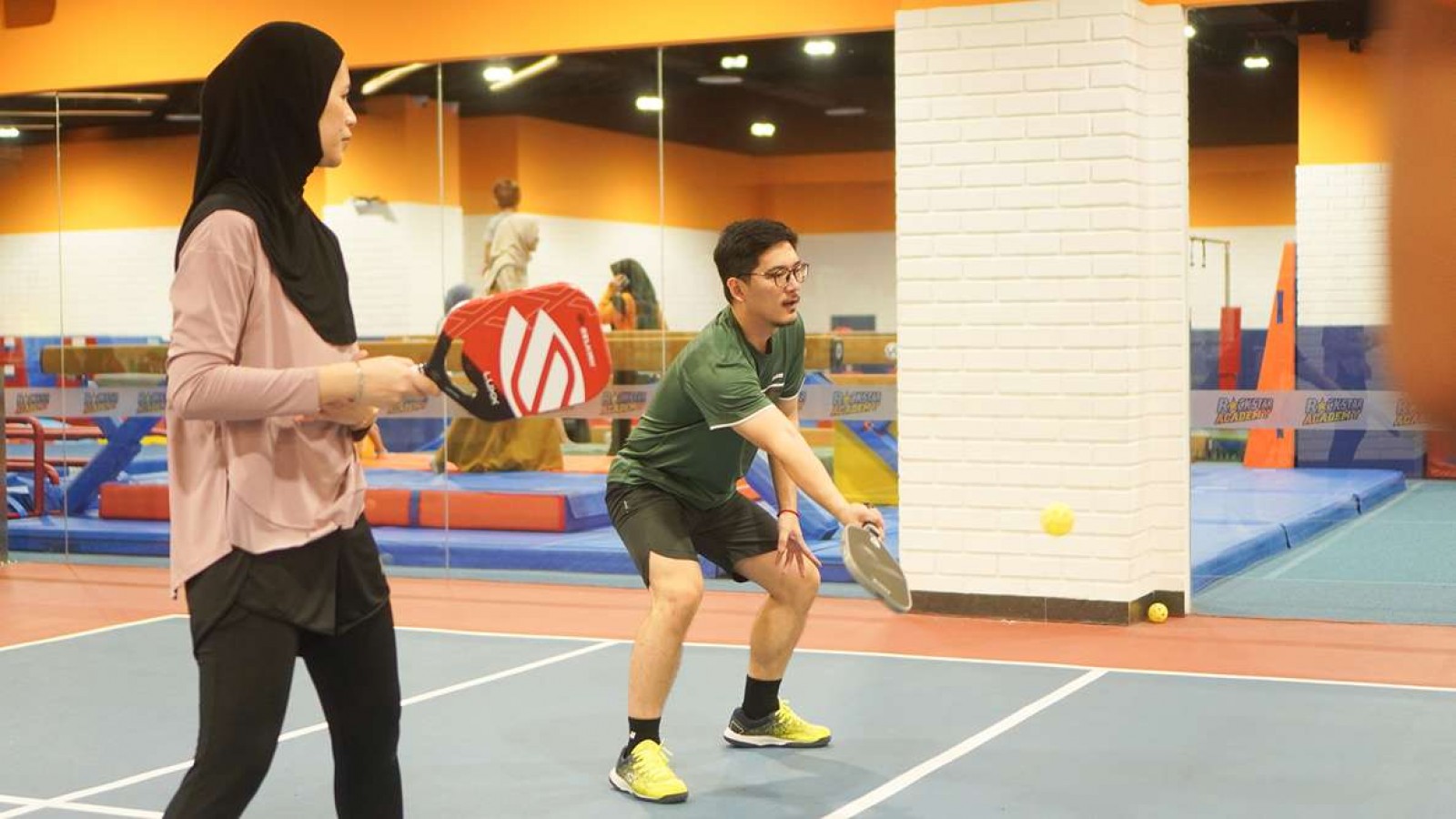
Pickleball vs tennis are both popular racquet sports that offer great opportunities for physical activity, social interaction, and competitive play. While they share some similarities, they also have distinct differences that set them apart.
Understanding these differences can help enthusiasts choose which sport suits their preferences and skill level best. In this article, we'll delve into the nuances of pickleball vs tennis, exploring various aspects such as equipment, court size, rules, and gameplay.
The Equipments
Pickleball and tennis are two racquet sports that require different types of equipment, each tailored to the specific demands of the game. Understanding the differences in equipment is essential for players looking to engage in either sport. Here's a breakdown of the key distinctions:
1. Nets
Pickleball nets are quite similar to tennis nets but have a distinct difference in height. While a standard tennis net is pulled taut to maintain a consistent height of 36 inches across its length, a pickleball net is also typically 36 inches high but is not as tightly stretched.
This variance results in the pickleball net measuring approximately 34 inches in the middle. Additionally, because pickleball courts are narrower than tennis courts, nets designed specifically for pickleball may also be slightly shorter in width.
2. Rackets
Tennis rackets feature a larger head size and tightly pulled strings, allowing players to generate significant power and spin on their shots. The size and string tension of tennis rackets can vary depending on factors such as player preference, age, and playing style.
Modern tennis rackets are often made of lightweight materials such as graphite or carbon fiber to enhance maneuverability and power. Pickleball paddles are smaller and more compact than tennis rackets, resembling oversized ping-pong paddles.
They are typically made of materials such as wood, composite, or graphite and have a solid surface without strings. Pickleball paddles are designed for control and finesse rather than power, allowing players to execute precise shots and placement.
3. Balls
Pickleballs are lightweight plastic balls with many perforations, designed to bounce minimally. Sanctioned pickleballs must weigh between 0.78 and 0.935 ounces, and the bounce height when dropped from 78 inches is 0 to 34 inches.
Tennis balls, on the other hand, are heavier and designed to bounce much higher. They must weigh between 1.975 and 2.095 ounces, with a required bounce height of 53 to 60 inches when dropped from a height of 100 inches.
Rules of Play
The rules of play in tennis and pickleball differ significantly, despite some initial assumptions of similarity.
In tennis, players have the flexibility to serve overhand or underhand, employing various serves, including complex or aggressive ones, to gain an advantage and win points.
Conversely, in pickleball, scoring is exclusive to the serving player or team, and all serves must be executed underhand.
Additionally, players are prohibited from volleying the ball if they are positioned within the forwardmost section of the court, known as "the kitchen."
While both sports feature both doubles and singles matches, tennis typically emphasizes singles play, whereas pickleball often prioritizes doubles competitions.
Court Dimensions
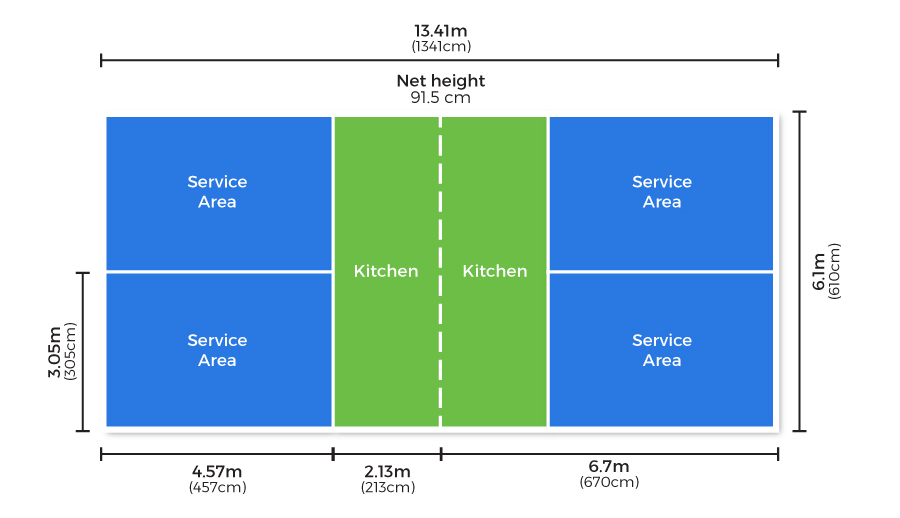
Pickleball courts, mirroring the dimensions of badminton doubles courts, are notably smaller compared to tennis courts. A standard pickleball court measures 44 feet in length and 20 feet in width, with a net height of 34 inches at the center (36 inches at the posts).
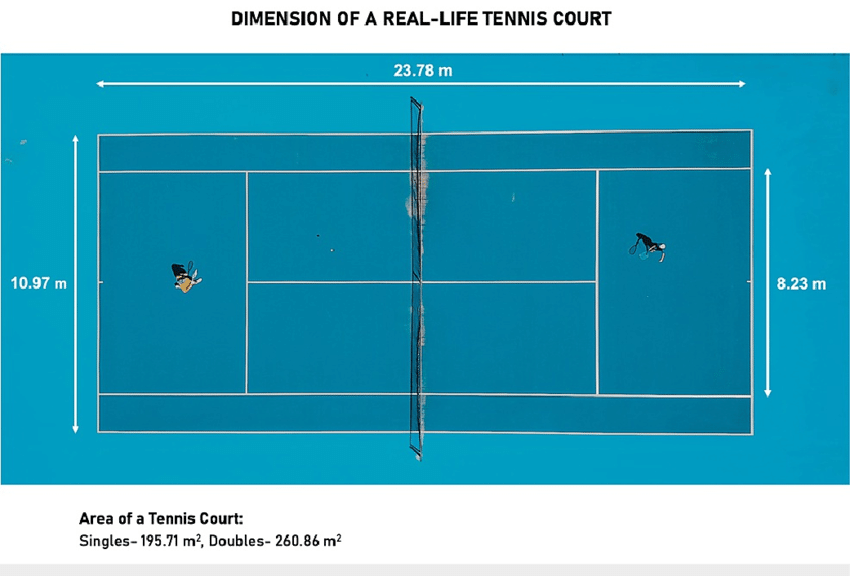
On the other hand, tennis courts are significantly larger, nearly doubling the size of standard pickleball courts. For doubles matches, tennis courts span 78 feet in length and 36 feet in width, while singles matches are played on courts measuring 78 feet in length and 27 feet in width.
Playing Technique
Although pickleball and tennis share the same “racquet-sport family,” the way you hit, move, and strategize feels very different.
1. Serving Technique
In pickleball, serving is done underhand, which creates a gentler and more controlled motion. The paddle must swing upward, and the ball must be struck below waist level. This naturally limits power, so players focus on accuracy, depth, and placement instead of speed. A deep serve pushes opponents toward the baseline, giving the serving team more time to prepare the next shot. Since pickleball allows only one serve attempt, players prioritize consistency over risk.
Meanwhile, tennis offers a more complex and powerful serving technique. Players use an overhand movement with a ball toss, racquet drop, body rotation, and explosive upward swing. This allows them to generate high speeds and various spins like topspin, slice, and flat serves. With two serve attempts, players often take more risks on their first serve and use a safer, more controlled second serve if needed. Serving in tennis becomes a major offensive weapon, often used to win points outright or force weak returns.
2. Return of Serve
In pickleball, returning the serve requires a compact, controlled swing because the ball moves slower and the court is smaller. Players aim to return the ball deep into the opponent’s court to prevent them from rushing toward the non-volley zone (the kitchen), which is the most strategic position in the game. The return of serve in pickleball is less about overpowering the opponent and more about setting up the rally and maintaining control. Footwork remains light and efficient, allowing players to transition quickly toward the kitchen line.
In tennis, the return of serve is more reactive because serves can exceed 100 mph. Players use bigger swing options depending on the opponent’s serve—blocking the ball back, chipping with slice, or taking a full groundstroke. The goal is to neutralize the power of the serve and place the ball in a way that regains control of the point. Footwork is essential, with players using a strong split-step and rapid side movements to adjust to fast and varied serve placements.
3. Drive Techniques
Driving the ball in pickleball involves short, compact strokes, usually hit relatively flat with minimal topspin. Because the pickleball slows down quickly, drives are less about long rallies and more about creating immediate pressure. Drives are often used early in the point to force the opponent into a mistake or produce a pop-up that can be attacked at the net. Placement, timing, and reading the opponent’s position become more important than sheer power.
In tennis, drives rely on long, accelerated racquet paths and make heavy use of topspin, allowing the ball to travel high over the net and dip back into the court. Tennis drives are powerful shots used frequently in baseline rallies to push opponents back or dictate the rhythm of the point. The combination of racquet strings, ball weight, and larger court space makes driving a central part of tennis strategy, often forming the foundation of aggressive baseline play.
4. Groundstrokes
Groundstrokes in pickleball focus on control, accuracy, and preparing the transition into soft play near the kitchen. Players use shorter backswings and smaller follow-throughs to ensure stability and quick recovery. Because the ball does not naturally spin much, pickleball groundstrokes typically stay low and fast or move toward softer shots like drops and dinks as players approach the net. The goal is not to overpower but to manipulate pace and positioning.
In tennis, groundstrokes are the backbone of the game and involve larger swings that engage the entire body. Players use heavy topspin to generate safe yet aggressive shots that bounce high and push the opponent away from the baseline. Slices, flat shots, and angled strokes add variety and complexity to rallies. Tennis groundstrokes emphasize power, spin, endurance, and point construction, making them a dramatically different experience compared to pickleball’s compact and tactical approach.
The Scoring System
The scoring systems in tennis and pickleball diverge significantly, reflecting the unique characteristics of each sport. Tennis employs a traditional scoring method, where points are counted as 15, 30, and 40, with any player eligible to score regardless of who served.
Matches often involve prolonged deuce tiebreakers, and games are typically contested as best-of-three or best-of-five sets.
In contrast, pickleball features a simplified scoring system. Each point scored is counted as "one," and games are played to 11 points, with a winning margin of 2 points. Standard matches consist of playing two out of three games.
This streamlined approach ensures brisk and dynamic gameplay, enhancing the overall experience for participants.
The Athleticism
Tennis is renowned for its combination of physical prowess and strategic finesse, demanding considerable running and powerful racket swings from players.
On the other hand, pickleball presents a notably less rigorous physical challenge, requiring comparatively less running.
This lower activity level renders pickleball more accessible, particularly to individuals with physical limitations or older players who may find extensive running challenging.
Pick Your Game Today!
In the pickleball vs tennis debate, both sports offer unique experiences and benefits. Ultimately, the choice between the two comes down to personal preference, fitness level, and desired level of competition.
Ready to elevate your pickleball skills to the next level? Look no further than the Pickleball Program at Rockstar Academy, where we blend the excitement of pickleball with expert coaching and a supportive community.
Our pickleball class, offered at the renowned Sports & Performing Arts Academy, provides a dynamic learning environment for players of all levels. Whether you're a beginner looking to master the basics or a player aiming to refine your technique, our program has something for everyone.
Apart from our pickleball classes, RockStar Academy also offers an exciting Tennis Program designed for kids, beginners, and adults. What makes our program special is our use of TouchTennis—a fun, modified version of traditional tennis that makes learning easier and more enjoyable.
For kids, TouchTennis helps build confidence, coordination, and essential tennis skills while keeping the experience playful and motivating. For beginners of any age, it provides a friendly and accessible way to understand the game without feeling overwhelmed.
And the best part? You can experience it firsthand with our free trial offer. Don't miss this opportunity to join us on the court and unleash your pickleball potential. Sign up for your free trial today at Rockstar Academy!

FAQ
Why do people like pickleball more than tennis?
Pickleball is often preferred for its accessibility, requiring less physical exertion compared to tennis. Additionally, the smaller court size and slower ball speed make it easier for beginners to pick up and enjoy.
Is pickleball a high-risk sport?
Generally, pickleball is considered a low-impact sport, resulting in fewer injuries compared to higher-impact activities. However, as with any physical activity, there is still a risk of injury, particularly if proper technique and safety precautions are not followed.