What is a Taekwondo Feint? Definition, Drills, and Strategic Application
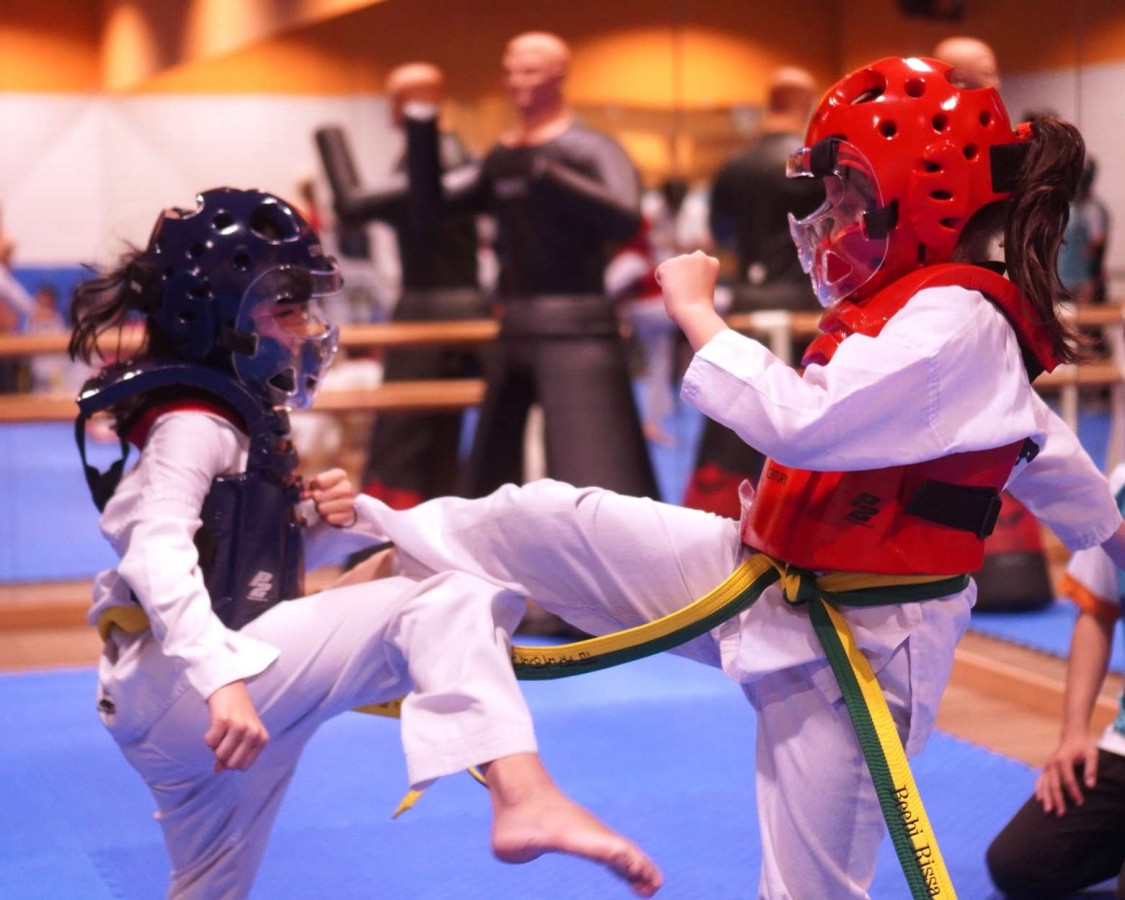
In Taekwondo, winning a match takes more than speed and power. A smart athlete knows how to confuse an opponent and force mistakes. This skill comes from mastering taekwondo feints. A feint involves pretending to attack so the opponent reacts, creating an opening for a real strike.
In this article, you will learn the meaning of feinting and faking in Taekwondo, the different types of taekwondo feints, how to perform them correctly, and effective ways to train feints so they work during sparring and competition.
What Is a Feint and Faking in Taekwondo?
Feints and fakes are smart tools used to confuse your opponent and control their reactions. A fake is an attack that looks real but stops before it fully lands. The goal of a fake is to make your opponent block, move, or panic, thinking a real attack is coming. Once they react, you gain an opening to launch your real technique.
A feint does not always look like an attack. It can be a small body movement, a change in posture, a step, a shoulder twitch, or even a sound meant to distract or deceive your opponent.
Feints do not need to move toward the opponent at all. Both feints and fakes help you stay unpredictable and make your attacks in Taekwondo more effective.
Types of Feints in Taekwondo
Feints come in many forms, and each one works by pulling your opponent’s attention in the wrong direction. When done correctly, feints make your attacks harder to read and easier to land. Here are some common types of feints in Taekwondo:
1. False Movement
False movement happens when you move a body part or shift your weight just to distract your opponent. This can be a small head movement, a shoulder twitch, or even a hand gesture.
For example, you might use the fingers of your lead hand to signal “come here.” When your opponent’s eyes focus on that motion, you quickly throw a punch or kick with your other hand or leg.
2. Eye Misdirection
Eye misdirection is a subtle but effective feint. You briefly look in one direction while actually moving or attacking in another. Since many fighters follow eye movement, this trick can delay their reaction and give you a clean opening to strike.
3. Change of Pace
This feint uses timing instead of movement. After a fast and aggressive attack, you suddenly slow down or act like you are done attacking.
When your opponent relaxes or lowers their guard, you explode with another quick attack. This sudden change catches many fighters off guard.
4. Psychological Feint
A psychological feint happens even before the match starts. You might act nervous, scared, or unsure to make your opponent feel confident. Then, at the command “Sejak!”, you switch into a focused and aggressive fighter.
You can also do the opposite by acting confident or calm. The key is to stay subtle so your opponent notices it naturally without thinking you are overacting.
How to Do a Feint in Taekwondo
A good feint does not need to be big or flashy. Small, smart movements combined with good timing can be far more effective. Below are several practical ways to perform a feint in Taekwondo:
A. Body Drop
A body drop feint is done by moving your lead hand forward and suddenly bending your lead knee so your body drops quickly.
This makes it look like you are lunging in for an attack. Most opponents will react by blocking or stepping back, giving you an opening to attack immediately after.
B. Drawing
Drawing is a more advanced type of feint. Instead of creating an opening, you purposely expose one on your own body to invite your opponent to attack. When they take the bait, you slip to the inside or outside and counterattack.
This feint relies heavily on speed, timing, and good judgment, but it can be very effective once mastered.
C. Cocking
Cocking means pulling your arm back as if you are about to throw a punch. This simple movement can make your opponent tense up or react defensively.
When they do, you can either attack with another technique or quickly change direction and strike an open target.
D. Sounds
Using sound as a feint can influence your opponent’s instincts. Low, growling sounds often make opponents crouch and become defensive because they sense an incoming attack.
Higher-pitched sounds tend to make them stand more upright and alert. These reactions create small openings you can take advantage of right away.
E. Frame Shifting
Frame shifting works by messing with your opponent’s visual focus. You create a “frame” with your arms held up like a guard, which becomes the reference point for their attacks.
By quickly shifting the frame, moving your head, or moving both in opposite directions, you cause their punches to miss without even blocking. This feint is subtle but very effective when used with good timing.
How to Train a Feint in Taekwondo
Training a feint in Taekwondo takes patience, awareness, and consistency. The goal is to make your movements look natural and believable so your opponent reacts exactly the way you want. Here are some tips to help you train feints properly:
1. Practice in Front of a Mirror
Training in front of a mirror helps you see your own movements clearly. You can check whether your feints look natural or forced. This also helps you control small details like posture, eye direction, and timing.
2. Keep Movements Precise and Subtle
A good feint does not need big movements. Small, sharp, and clean motions are harder to read and faster to execute. Subtle feints look more realistic and make your opponent react without realizing they were tricked.
3. Anticipate Your Opponent’s Reaction
Every feint should have a purpose. Before using one, think about how your opponent is likely to react. Training this mindset helps you react instantly once the opening appears.
4. Vary Your Feints
Avoid using the same feint repeatedly. If you repeat it too often, your opponent will catch on. Mix different feints, change rhythm, and switch levels to stay unpredictable during sparring or competition.
5. Make Every Feint Convincing
Use your whole body to sell the feint. Your eyes, facial expression, shoulders, hands, feet, and legs should work together to make the fake look real. The more believable the feint, the stronger your opponent’s reaction will be.
Want to Outsmart Your Opponent?
Using taekwondo feints the right way can turn you into a much more dangerous and confident fighter. Feints help you stay one step ahead, control your opponent’s reactions, and attack with better timing.
The Taekwondo Program at Rockstar Academy is designed to help students build strong technique, confidence, and sharp fighting instincts through structured and fun training.
We also provide Taekwondo Testing for students as an essential part of their learning journey. RockStar Academy Taekwondo Testing, conducted twice a year, reflects our commitment to supporting students as they progress to higher belt levels in a structured and motivating way.
As a leading Sports & Performing Arts Academy, Rockstar Academy focuses on mastering fundamentals, improving flexibility, and refining powerful taekwondo kicks moves that work in both sparring and competition.
Students also get the opportunity to grow their skills and perform on a bigger stage through exciting events like RockOlympics, where technique, discipline, and performance come together. Want to experience the training vibe firsthand? You can join our free trial class and feel the difference before you commit!
FAQ
What is the difference between a feint and a fake?
A fake looks like a real attack but stops early, while a feint is any movement or action used to deceive an opponent.
Are you allowed to feint in Taekwondo?
Yes, feints are allowed and commonly used in Taekwondo to create openings and score points.