Essential Gymnastics Warm Ups for Flexibility and Strength
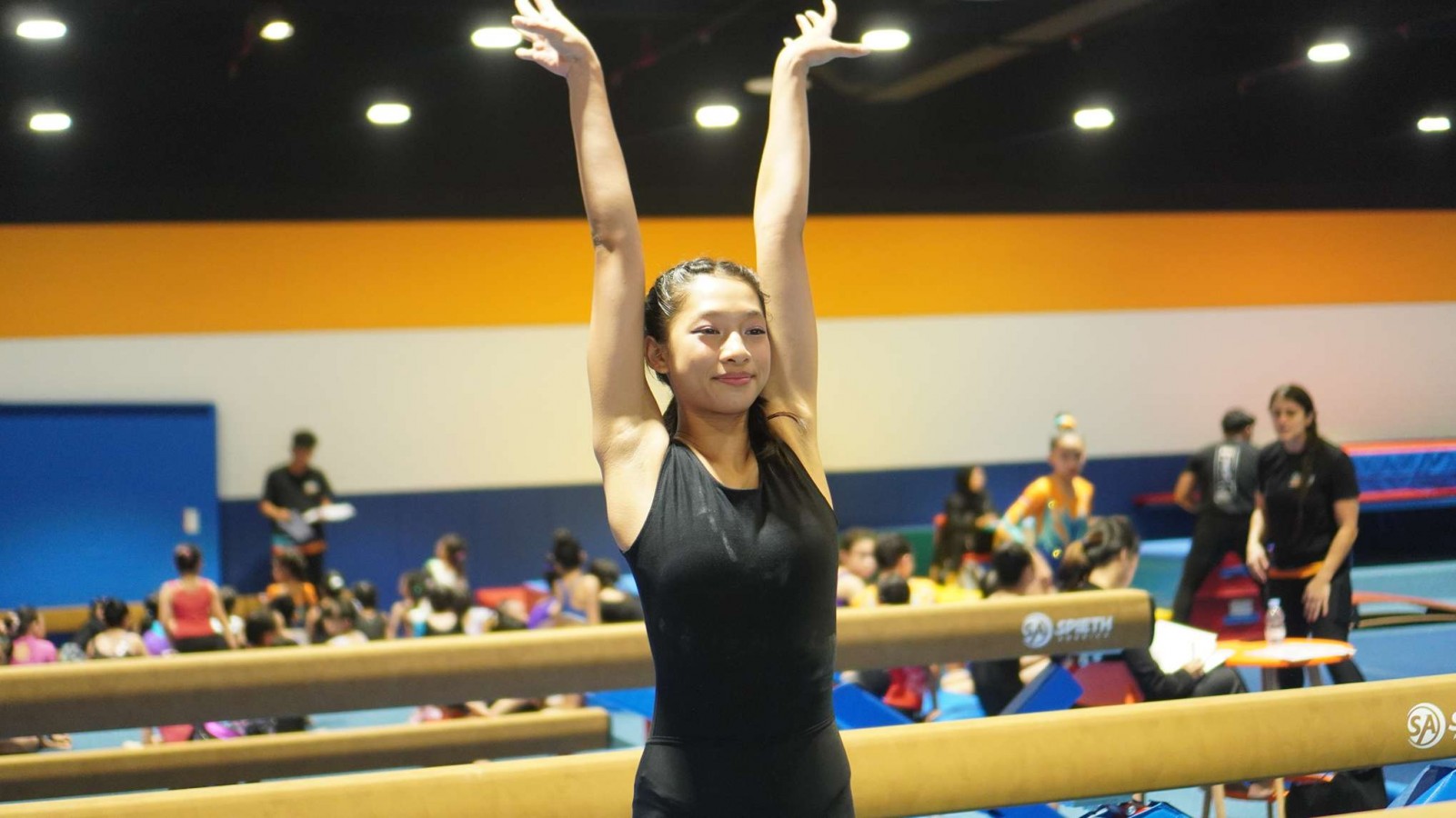
Before flipping, jumping, or holding powerful poses, every gymnast needs one thing first: proper gymnastics warm ups. Warming up prepares your body for movement, improves performance, and helps prevent gymnastics injuries.
Whether you are a beginner or an advanced gymnast, warm ups should never be skipped. In this article, we will explain what warm ups are in gymnastics, share effective warm up moves, and highlight the benefits of doing gymnastics warm ups before training.
What Are Warm Ups in Gymnastics?
Warm ups in gymnastics are simple exercises done before training or performing skills to get the body ready for movement. They help raise your heart rate, loosen your muscles, and prepare your joints for strength, balance, and flexibility work.
Instead of jumping straight into hard skills, gymnastics warm ups slowly wake up your body so it can move better, feel smoother, and stay safer during practice.
Warm Up Moves for Gymnastics
A good gymnastics warm up should wake up your whole body and prepare you for more challenging skills. The goal is to move smoothly, build control, and activate the right muscles before training. Here are some effective warm up moves for gymnastics you can follow:
1. Light Cardio
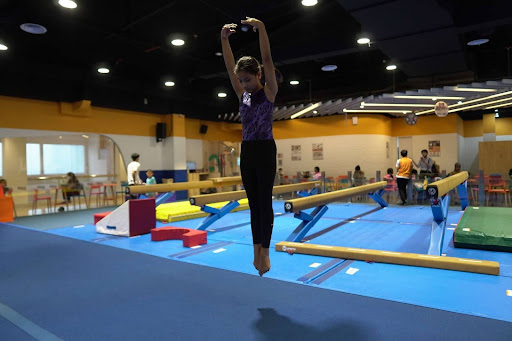
Start your warm up with 2–3 minutes of light cardio such as jogging around the gym, skipping rope, or doing easy jumping jacks. The main goal here is to raise your heart rate and increase blood flow to your muscles.
This helps your body warm up evenly and reduces stiffness, making your movements feel lighter and smoother. Light cardio also prepares your lungs and endurance so you do not feel out of breath once training becomes more intense.
2. Dynamic Mobility
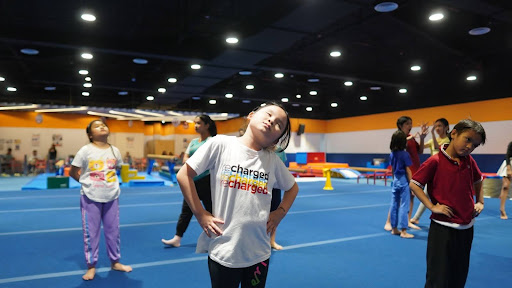
After cardio, move into dynamic mobility exercises like leg swings, hip circles, and arm rotations. These movements gently take your joints through their natural range of motion without holding long stretches.
Leg swings loosen the hips and hamstrings, hip circles improve lower-body mobility, and arm rotations prepare the shoulders for weight-bearing skills.
Dynamic mobility is important in gymnastics because it improves flexibility while keeping muscles active and responsive.
3. Core Activation
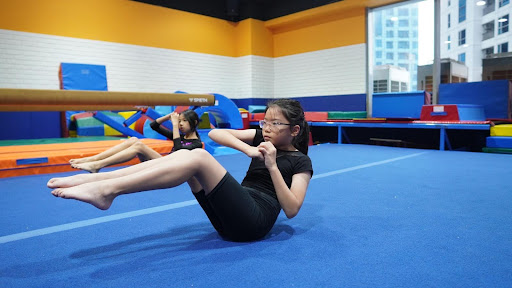
Core strength is the foundation of almost every gymnastics skill, so activating it early is essential. Exercises like planks and hollow holds wake up your abdominal muscles and lower back.
A strong, active core helps you maintain balance, control body alignment, and protect your spine during skills such as flips, handstands, and landings. Core activation during warm ups helps your body stay stable throughout practice.
4. Balance Drills
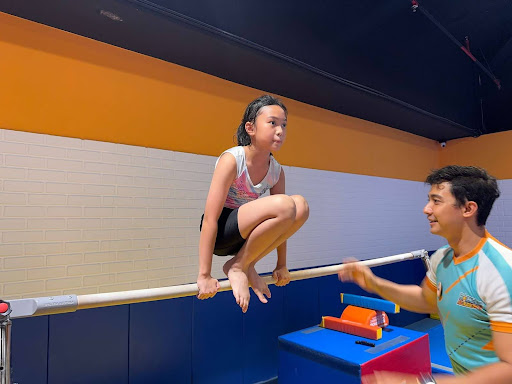
Balance drills such as single-leg hops, toe walks, or heel-to-toe walking help improve body awareness and control.
These exercises strengthen the feet, ankles, and stabilizing muscles that keep you steady during jumps, turns, and beam work.
Balance drills also sharpen coordination, which is especially important in gymnastics where small adjustments can make a big difference in performance and safety.
5. Sport-Specific Prep
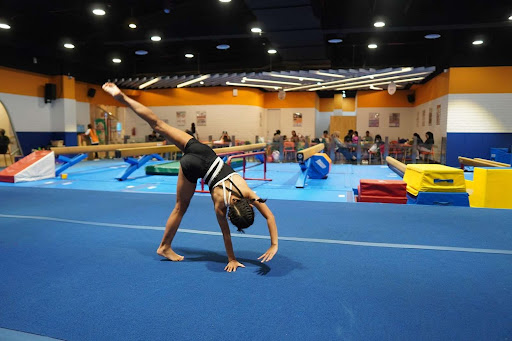
The final part of a gymnastics warm up should include sport-specific movements like handstands, cartwheels, or light tumbling passes. These exercises connect your warm up to actual gymnastics skills without going full intensity.
They help your body adjust to upside-down positions, weight on the hands, and dynamic movement patterns. This step ensures your muscles, joints, and mind are fully prepared before harder skills begin.
Advantages of Doing Gymnastics Warm Ups
Doing proper gymnastics warm ups plays a huge role in performance, safety, and long-term progress. Research and real-world coaching experience both show that smart warm ups make a noticeable difference in how gymnasts move and feel during training. Here are the key advantages:
A. Improves Flexibility, Coordination, and Performance
Studies consistently show that warm ups help improve flexibility and coordination while boosting overall performance. Research highlights that combining dynamic stretching with activation exercises works better than relying only on static stretching.
This means smart gymnastics warm ups that include movement-based drills help athletes feel stronger, quicker, and more prepared compared to just jogging or holding long stretches.
B. Increases Range of Motion with Dynamic Drills
Dynamic warm-up drills such as leg swings, arm circles, and rotational lunges help improve range of motion more effectively than static stretching alone.
Research comparing gymnasts and ballet athletes found that dynamic routines allowed the body to move more freely.
This supports using active gymnastics stretches that prepare muscles and joints for the wide movements required in gymnastics skills.
C. Helps Prevent Injuries
Gymnastics puts a lot of stress on joints, especially the knees and ankles. Structured warm ups that include balance and control drills help reduce injury risk.
Balance exercises like single-leg stands or hop-to-balance movements improve joint stability and body control. This makes gymnasts more resilient during landings, turns, and high-impact skills.
D. Builds Core and Pelvic Stability
Flexibility often gets the spotlight, but core strength is just as important. Research shows that warm ups including core and pelvic stability exercises lead to better overall control and balance.
Movements like planks, hollow holds, and controlled bridges activate key muscles that support advanced gymnastics skills and protect the spine.
E. Prepares Muscles with Purposeful Stretching
The way stretching is used in gymnastics warm ups has evolved. Research suggests that too much static stretching can reduce explosive power, while dynamic stretching helps muscles feel ready and responsive.
This means gymnasts benefit more from short static stretches combined with active, movement-based drills that activate the body instead of slowing it down.
Warm Up Smart and Train Better!
Never underestimate the power of good gymnastics warm ups. They prepare your body, protect you from injuries, and help you perform at your best. By making warm ups a regular part of your routine, you build flexibility, strength, and confidence that carry into every skill you practice.
The gymnastics program at Rockstar Academy is built to help athletes grow stronger, more flexible, and more confident in every movement. As a trusted Sports & Performing Arts Academy, Rockstar Academy focuses on proper technique, safe progressions, and effective gymnastics stretching to improve flexibility and prevent injuries.
Each student is guided through structured training and regular participation in events and competitions like Gymnastics Testing, Elite Championships and RockOlympics, so progress is clear, measurable, and motivating.
Curious to see how it feels to train in a supportive and energetic environment? You can join our free trial class and experience the program firsthand before signing up.
FAQ
What are some gymnastics warm ups?
Gymnastics warm ups include light cardio, dynamic mobility drills, core activation, balance exercises, and basic skill prep.
What are some good stretches for gymnastics?
Good stretches for gymnastics include leg swings, lunges, shoulder mobility drills, and gentle dynamic stretches for hips and back.