Parkour Precision Training: The Guide to Jumps and Landings Precision
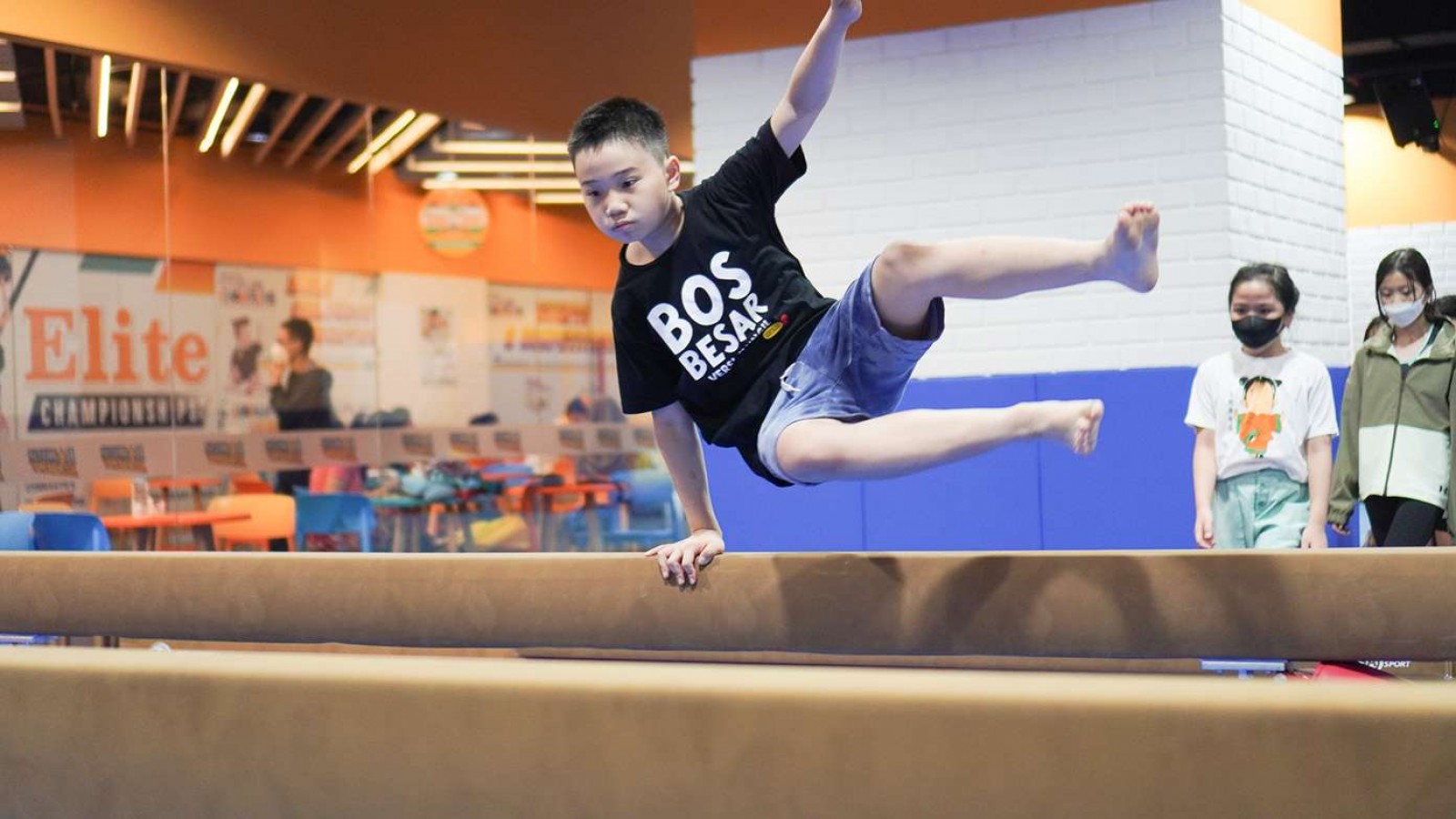
If you're new to parkour and wanting to learn parkour, mastering precision in jumps and landings will definitely step up your game. In this article we’ll dive into what precision training is, how to perform precision jumping and landing, common mistakes to avoid, and effective drills and practice routines you can follow. So let’s get to the move!
What is Precision Training in Parkour
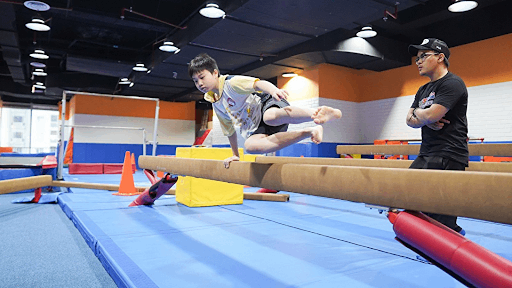
Precision training in parkour is all about jumping from one point to another and landing exactly where you intend with full control, balance, and minimal momentum. Instead of big tricks, the focus is accuracy and stability.
You choose a specific landing target (like a ledge or rail) and practice landing cleanly, which sharpens your awareness of foot placement, body position, and impact absorption.
How to Do Precision Jumping and Landing
To perform precision jumping and landing in the parkour, there are four steps that must be learned. Here precision jumps follow four main phases: take-off, flight, landing, and stop.
1. Take-Off
Focus on your landing spot, set a solid stance, and generate power by pushing off the balls of your feet with a strong arm swing. Stay aligned and adjust your body mid-air for a controlled jump.
2. Flight (Mid-Air)
With limited airtime, prioritize control over your legs and feet, then steady your arms, and prepare your body for a clean landing.
3. Landing
Land on the balls of your feet, keep your feet close for stability, and let your joints bend to absorb impact while using your arms and core to stay balanced.
4. Stop (Control the Momentum)
After landing, hold your position without moving. Bend your knees and bring your arms forward slightly to cancel any remaining momentum before resetting or continuing.
Common Mistakes While Doing Precision Jumps and Landings
There are several common mistakes that beginners often make when doing parkour. We have summarized them all so that you can avoid these mistakes.
- Not Defining the Landing Target Clearly
Jumping without a precise target leads to messy landings and distance mistakes. Always aim for a clear, specific spot to improve accuracy. - Insufficient Leg Drive or Weak Arm Swing
Relying on momentum or lacking power can make you fall short or land unstably. Focus on a strong push-off and powerful arm swing, supported by leg-strength training. - Poor Body Control in the Air
Stiff posture and trailing legs reduce your ability to adjust mid-air. Keep your knees tucked, eyes on the target, and body aligned to stay in control. - Landing Heel-First or With Locked Legs
Landing on your heels or with stiff legs creates high impact and instability. Land on the balls of your feet and absorb the impact with bent joints. - Feet Too Wide or Off-Centre on Landing
Landing too wide or off the target affects balance. Aim to land centered with feet together or shoulder-width apart, using core stability to stay controlled.
Precision Training Drills and Practice
Now we’ll cover effective drills you can include in your training plan to develop jump and landing precision.
1. Comfort Zone & Max Distance Drill
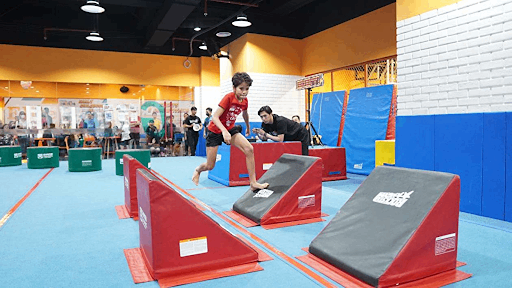
Begin by checking your max standing jump, then train within 60–80% of that distance of your comfort zone where you can land consistently. Repeat 100–200 controlled jumps in this range to build technique, muscle memory, and confidence.
2. Target Line Jump
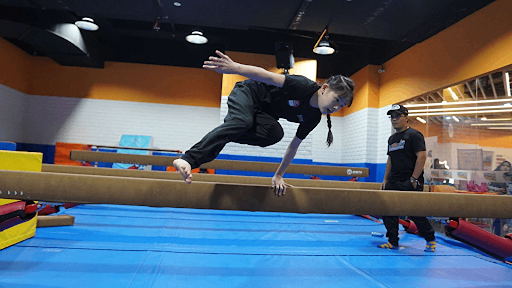
Practice landing precisely on a line or small platform from a standstill, focusing on clean take-off and proper landing technique. Once it becomes easy, gradually raise the height to increase difficulty.
3. Narrow Surface Precision
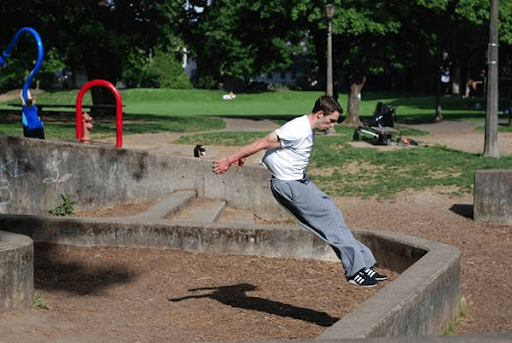
Start landing on a wider narrow surface and slowly reduce its width or increase the distance. As the landing area shrinks, your control, accuracy, and confidence improve.
4. Strength & Absorption Training
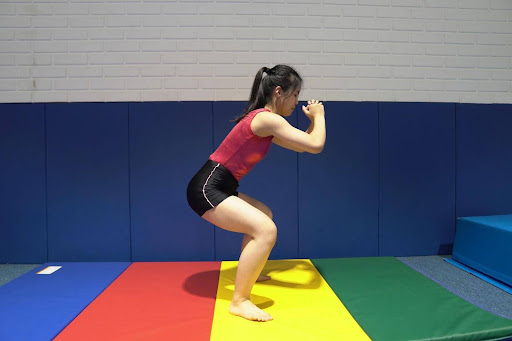
Build leg, ankle, and hip strength with squats, pistol squats, and calf raises. Add drop-and-absorb drills to train safe impact absorption and strengthen the joints involved in precision jumping.
5. Overshoot & Undershoot / Fail-Safe Drills
Next, remember to train how to handle missed landings. You can try undershoot by landing short and bouncing back, and overshoot by rolling forward to release momentum. These drills can build confidence and reduce hesitation.
6. Progression to Elevated/Narrower Targets
Once consistent on ground-level targets, progress by increasing height, distance, and reducing landing width. Eventually combine precision jumps with other movements only after mastering the basics.
Parkour Precision Training With Rockstar!
If you're serious about sharpening your precision jumps and landings, joining Rockstar Academy is a smart move. As a top-tier Sports & Performing Arts Academy, we provide a safe, professional environment where you can train under qualified instructors through our structured parkour class.
Beyond regular classes, Rockstar Academy hosts its own parkour competitions, giving you a real platform to test your skills. We also host the Elite Championships Parkour every term. This exciting event allows Parkour Class students to compete once every term in a mall atrium setting, complete with cutting-edge parkour equipment from around the world—delivering a high-energy, professional competition experience.
By training with Rockstar, you don’t just improve your agility and precision, but also build confidence and unlock opportunities for performance and competition at all levels.
Even better, they offer a free trial parkour program, so you can experience their training style and facility without commitment. What are you waiting for? Sign up today!
FAQ
How often should I practice precision jumps?
Aim 2–3 times per week if you’re serious. Consistent repetition helps build muscle memory and control (Citi Limits suggest thousands of jumps over time).
I keep landing too heavily, how do I fix it?
Focus on landing on the balls of your feet (front pads), bending knees and hips to absorb gently. Avoid rigid legs. Also reduce distance or height until you can land softly, then increase.
I’m scared to commit to the jump—what can I do?
Fear is natural. You can use the fail-safe drills (undershoot bounce, overshoot roll) to train safety and confidence. Also remember to stay in your comfort zone (60-80% of max) until you’re consistent.