How to Execute the Topspin Pickleball and When to Use It for Dominance
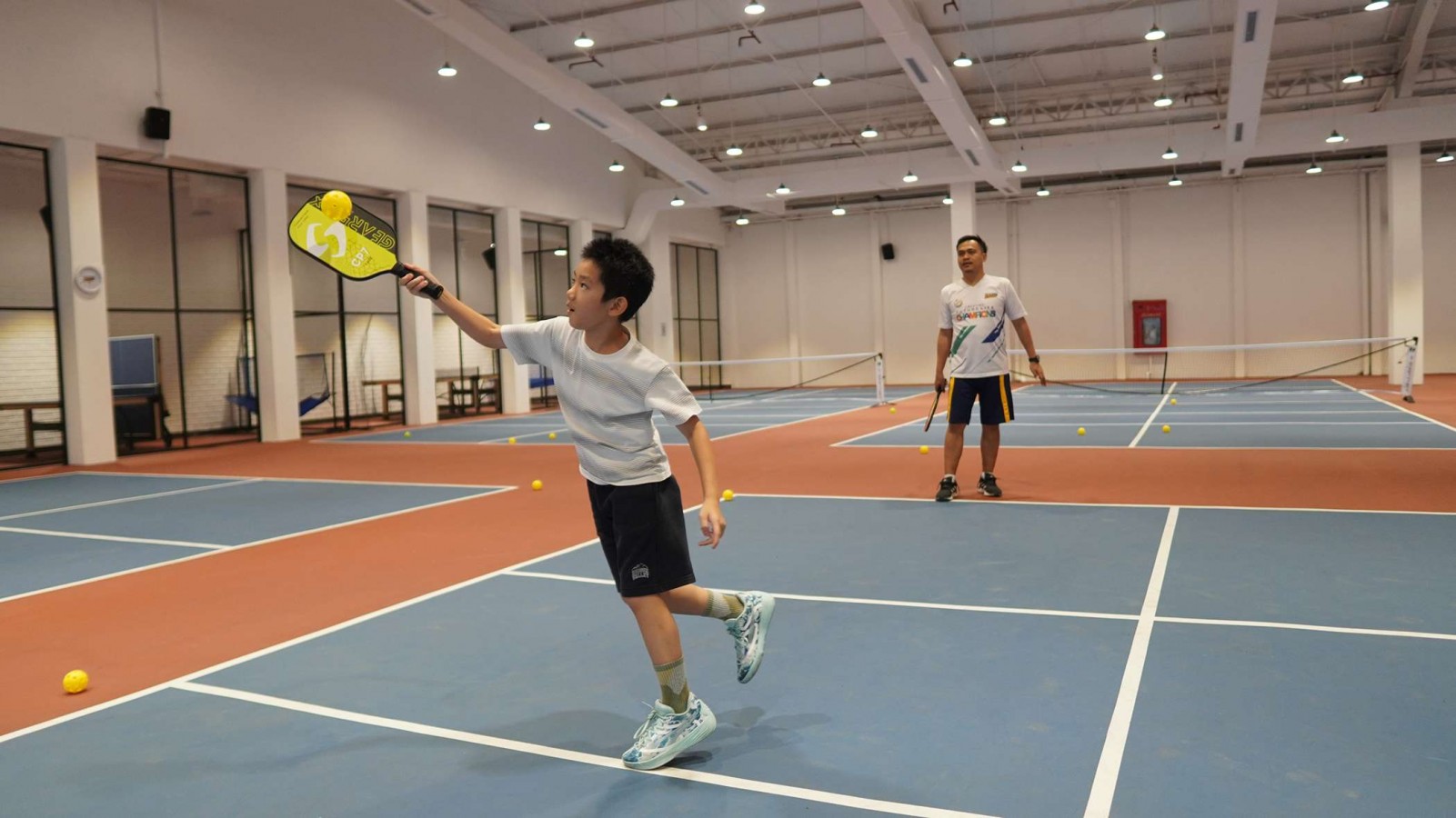
The ability to control the pickleball’s spin can make the difference between being a consistent player and becoming a dominant force on the court. One of the most effective spins you can master is topspin pickleball, a technique that adds power, control, and unpredictability to your shots.
Whether you’re playing singles or doubles, topspin helps you hit with confidence, keeping opponents on the defensive and giving your game a professional edge. Let’s learn it more here!
What is Topspin in Pickleball?
Topspin in pickleball is a forward-rotating shot that makes the ball dip quickly over the net and bounce higher off the court. It’s created by brushing the paddle upward from low to high, giving players more control and power.
This spin keeps shots in play, adds safety when hitting hard, and makes returns harder for opponents. Topspin helps drives and dinks clear the net while dropping fast, making it a key technique used by advanced players to stay consistent and dominant under pressure.
How to Do the Topspin in Pickleball
Mastering topspin requires the right grip, paddle angle, swing path, and body positioning. It may feel tricky at first, but with practice and good technique, it becomes a natural part of your game.
1. Start with the Right Grip
The best grip for generating topspin is often the continental grip or slightly towards the eastern grip. These allow you to create an upward brushing motion with control and comfort.
2. Set Up Your Body and Stance
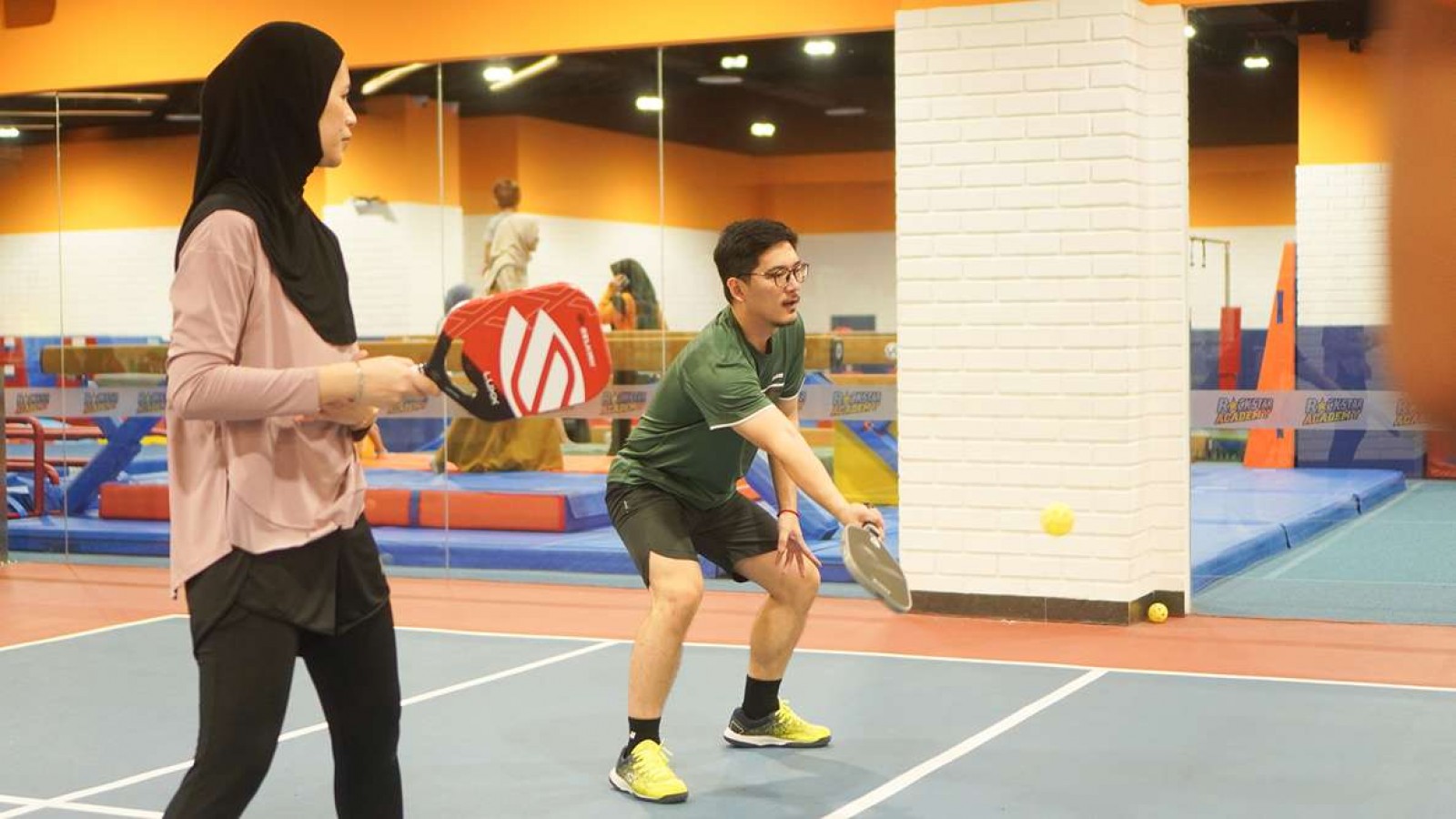
Position your feet shoulder-width apart, knees slightly bent, and stay balanced. For forehand topspin shots, step forward with your non-dominant foot, keeping your paddle below the ball before swinging up.
3. The Swing Path: Low to High
The motion that creates topspin is a low-to-high swing. Instead of hitting straight through the ball, think of brushing up against it.
- Start your paddle below the ball.
- Swing upward and forward, letting the paddle face slightly closed (tilted down).
- Make contact with the lower part of the ball, brushing it upward.
- Follow through naturally, your paddle should finish above your shoulder.
4. Control Your Paddle Face
A slightly closed paddle face (angled forward) helps maintain a controlled, dipping trajectory. If your paddle is too open, the ball will float high and long. Too closed, and it may go into the net.
5. Timing and Contact Point
Contact the ball in front of your body, not beside or behind you. This gives you better control, power, and spin.
When Should You Use Topspin?
Topspin isn’t for every shot, knowing when to use it can maximize its effect and help you dominate the rally.
1. Baseline Drives
When you’re hitting from deep in the court, topspin lets you drive the ball aggressively while keeping it in bounds. The dipping motion helps clear the net safely and land deep in your opponent’s side.
2. Approach Shots
As you move toward the net, a topspin approach shot keeps your opponent on the defensive. The ball bounces fast and high, forcing a weak or late return that sets you up for a putaway volley.
3. Passing Shots
If your opponent rushes the net, a topspin passing shot is an excellent choice. The extra spin makes the ball dip sharply over their paddle, often landing just inside the baseline.
4. Third Shot Drops
A controlled topspin on your third shot can help the ball arc over the net and land softly in the kitchen. The spin gives it extra control and a higher margin of safety.
5. Serves and Returns
Using topspin on your serve or return makes the ball kick up after bouncing, challenging your opponent to adjust their paddle angle quickly.
Topspin in Game Scenarios
Let’s look at how topspin plays out in real pickleball situations:
- Offensive Baseline Play: You’re in a deep rally. Using topspin allows you to hit harder without fear of overshooting, keeping your opponent pinned to the baseline.
- Transition Zone: Moving forward, you can hit a topspin roll shot that dips fast and forces your opponent to hit upward, giving you time to take control at the net.
- At the Net: While dinking, light topspin can make your shot skid and bounce unpredictably, putting pressure on your opponent’s timing.
- Defensive Recovery: When pushed back, a topspin lob can arc high, then drop quickly and stay in bounds, buying you time to reset the rally.
Tips to Improve Your Topspin
Here are several fun and practical tips for improving striking activities. These tips can help kids or beginner develop control, coordination, and confidence while keeping things enjoyable:
- Focus on the target, not just the swing
- Use a smooth and controlled motion
- Keep your feet active
- Don’t stop your swing right after you hit the ball. Let your bat, racket, or hand continue forward in a smooth motion.
- Watch and learn from your motion
- Set up mini-games like hitting a moving target or bouncing the ball before striking.
- Keep equipment kid-friendly and safe
- Stay relaxed and have fun
- Try striking with different tools or from different distances.
- Practice for a few focused minutes at a time, rest, and then repeat.
Drills to Improve Your Topspin
Do you want to learn or master topspin? Here are several drills that you can apply.
1. Wall Rally Drill
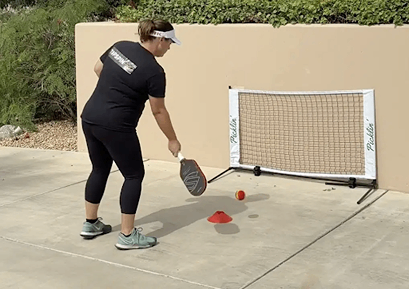
Stand a few feet from a wall and rally using only topspin shots. The short reaction time forces you to brush the ball cleanly.
2. Drop and Brush Drill
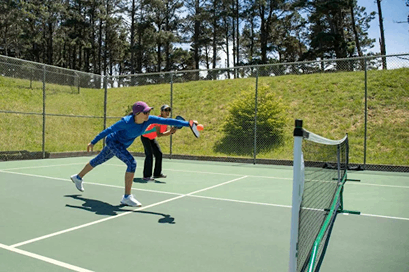
Drop a ball in front of you, then practice brushing it upward with your paddle instead of hitting straight through. Focus on the upward motion and ball trajectory.
3. Target Drill
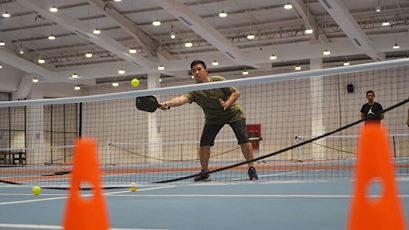
Place cones or markers on the opposite side of the court. Practice driving topspin shots that dip and land near those targets.
4. Shadow Swing Practice
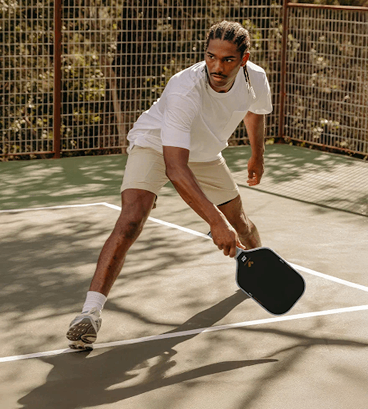
Without a ball, rehearse the low-to-high motion repeatedly. This helps build muscle memory and smooth out your swing path.
5. Spin Rally with Partner
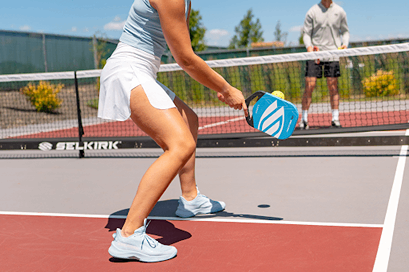
Rally with a partner using only topspin forehands and backhands. Try to maintain a steady rhythm and consistent bounce height.
Have You Mastered Topspin Pickleball?
Mastering topspin starts with understanding the fundamentals, beginning with the right forehand pickleball, which provides the control and paddle angle needed to generate that perfect spin.
But beyond individual practice, the best way to refine your pickleball skills is through expert coaching and guided training. At Rockstar Academy, a leading Sports & Performing Arts Academy, young athletes and enthusiasts of all levels can explore their potential in a supportive and engaging environment.
Rockstar Academy’s pickleball class is designed to help players build strong foundations while mastering advanced techniques like topspin, volleys, serves, and footwork. Led by professional coaches and supported by world-class facilities, each session blends structured skill development with fun and interactive gameplay. Students not only learn the mechanics of the sport but also build confidence, discipline, teamwork, and a lifelong love for active living.
Additionally, we also open the door to exciting competition like Elite Championships for kids and adults. These events play a huge role in helping students grow, as they encourage higher levels of achievement, promote consistent physical activity, and build strong discipline. Join Rockstar Academy and claim your free trial class now!
FAQ
Can beginners learn topspin easily?
Yes! Start slow with drop and brush drills. Focus on brushing the ball upward instead of hitting hard. With consistent practice, even beginners can master basic topspin.
Is topspin better than flat shots in pickleball?
Both have their place. Flat shots are faster, but topspin gives you more margin for error, especially when playing aggressively or close to the baseline.
Can I use topspin for dinking?
Absolutely. Light topspin dinks can make your opponent’s return more difficult because of the unpredictable bounce.