Top 10 Bodyweight Chest Exercises for Building Strength
Looking to build a stronger, more defined chest but don’t have access to a gym or weights? The good news is you don’t need expensive equipment to make serious progress. Bodyweight chest exercises are an excellent way to develop strength, power, and muscle definition using nothing more than your own body.
Today, we’ll explore the top 10 bodyweight chest exercises, explain their benefits, and walk you through step-by-step instructions so you can start training anytime, anywhere. Let’s check it out!
Why Bodyweight Chest Exercises Are Great
Before jumping into the exercises, it helps to understand what makes bodyweight chest training so useful:
- Accessible & Convenient: No gym or equipment needed, you can train anywhere.
- Scalable & Versatile: Change your hand/foot position, range of motion, or tempo to make it easier or harder.
- Engages Multiple Muscles: Works not just your chest, but also triceps, shoulders, core, and stabilizers.
- Boosts Strength & Posture: Helps improve posture, breathing, and everyday pushing or lifting.
- Safe & Adjustable: You can progress at your own pace while reducing the risk of injury.
Top 10 Bodyweight Chest Exercises (No Weights) + Instructions
Here are ten highly effective chest exercises using no equipment and how to do them properly:
1. Regular Push-Ups
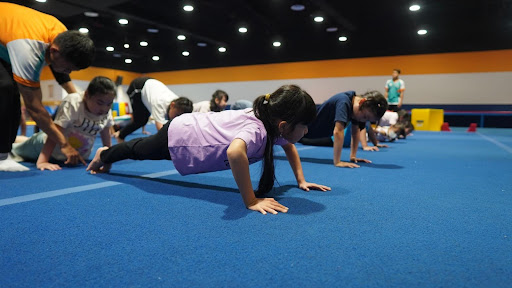
Regular Push-Ups is good for mid-chest, triceps, front shoulders, and core.
How to do it:
- Begin in a high plank position: hands under shoulders, body forming a straight line from your head to your heels.
- Engage your core, glutes, and legs to keep your body rigid.
- Lower your body toward the ground by bending the elbows; aim to get the chest close to the floor (but without losing alignment).
- Push back up by extending your arms until you return to plank.
2. Decline Push-Ups
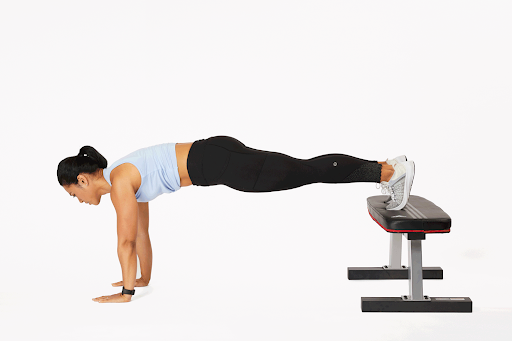
Decline Push-Ups are good for the upper chest and front shoulders. It is definitely a more challenging version of standard push-ups.
How to do it:
- Find a stable elevated surface for your feet (bench, step, box). Hands remain on the floor under shoulders (or slightly wider).
- Assume a straight-body plank, feet elevated.
- Lower your chest toward the ground, stopping when elbows are around ribcage level or until you feel good tension but no pain.
- Push back up, keeping the body line straight.
3. Incline Push-Ups
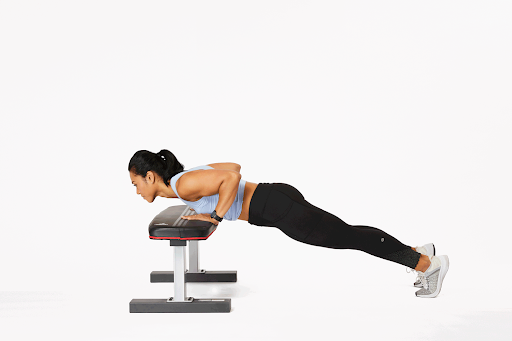
Incline Push-Ups aims for the lower chest muscles and less load than standard. This move is great for beginners or recovery phase.
How to do it:
- Use a stable elevated surface (bench, step, table) for your hands; feet on the floor.
- Body in a straight plank from shoulders to heels.
- Lower chest toward the elevated surface, keeping elbows tucked (not flared too wide).
- Push back up until your arms are straight.
4. Offset Push-Ups
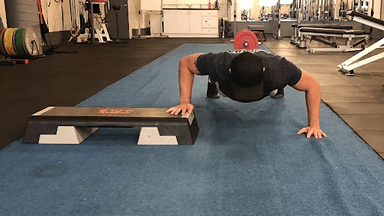
Offset Push-Ups is perfect for building asymmetric strength, boosting stability, and challenging one side of your body at a time. They’re also a powerful stepping stone on your journey toward mastering one-arm push-ups.
How to do it:
- Begin in a push-up position; one hand stays on the floor, the other is placed on a stable elevated object (you can try book, step, or small platform).
- Lower your body, keeping alignment, until your chest comes near the floor.
- Push up, then switch sides so both arms get equal challenge.
5. One-Leg Push-Ups
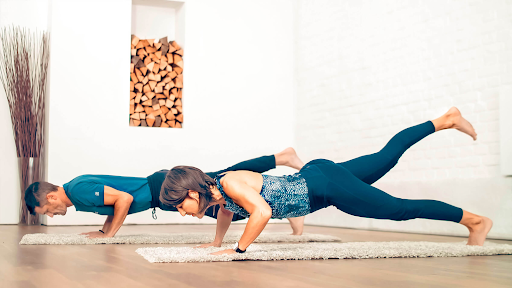
By lifting one leg, you add extra instability and shift the load, forcing your chest and shoulders to work harder while your core and hip stabilizers fire up to keep you balanced and strong.
How to do it:
- Get into a standard push-up (plank) position.
- Lift one leg off the ground, keeping it straight and extended (or slightly bent if needed) behind you.
- Perform the push-up lowering your chest, then pressing back up.
- Alternate legs in different sets so both sides are trained.
6. Diamond Push-Ups
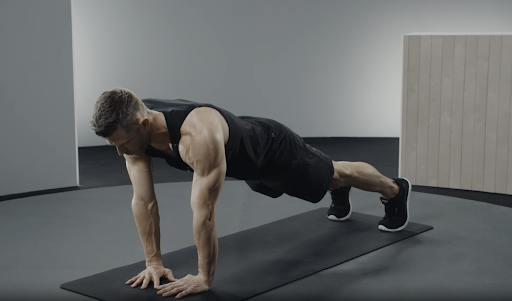
Diamond Push-Ups are good for the inner chest, triceps, and front shoulders. This move increases triceps involvement due to hand position.
How to do it:
- Get into a plank. Place your hands close together under your chest so that your thumbs and index fingers touch (forming a diamond or triangle shape).
- With your body straight, lower yourself toward the ground, keeping elbows close to your body.
- Push back up until arms are extended.
7. Plyometric Push-Ups
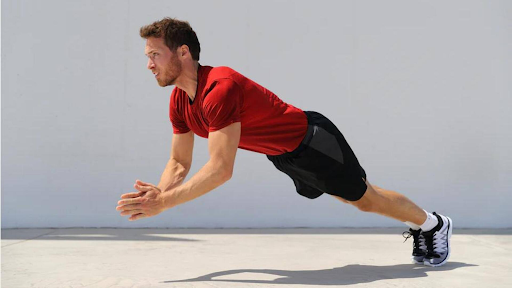
Plyometric push-ups are an explosive variation of the classic push-up designed to build power, speed, and upper body strength. Instead of just pressing yourself up, you push with enough force that your hands actually leave the ground.
How to do it:
- Begin in a high plank (standard push-up).
- Lower yourself toward the ground.
- Push upward explosively so your hands leave the ground (optionally add a clap).
- Land softly and immediately go into the next rep.
8. Wide Push-Ups
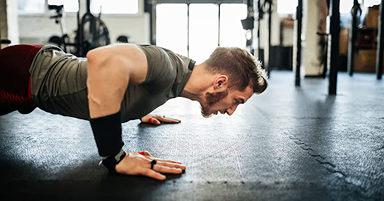
Wide push-ups are a simple but powerful bodyweight exercise you can do right at home to target your chest muscles more intensely than regular push-ups.
This variation is especially effective if your goal is to build a broader, stronger chest without needing any equipment. Since the movement reduces the range of motion for your elbows, it puts less stress on the triceps and emphasizes chest activation.
How to do it:
- Set your hands wider than shoulder width apart (one or two hand-widths wider).
- Maintain body in plank alignment.
- Lower your chest toward the ground; elbows will flare a bit outward (not excessively).
- Press back up to start.
9. Seal Push-Ups
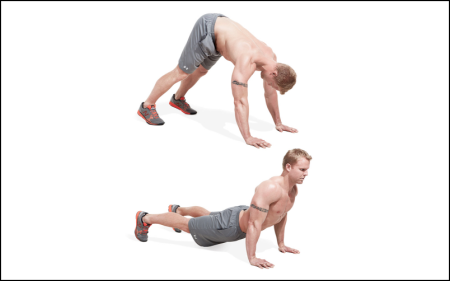
Seal push-ups are a unique variation of the traditional push-up that not only strengthen your upper body but also improve spinal mobility and posture. Instead of stopping at the top of a push-up, you extend your arms fully and lift your chest up, allowing your back to arch slightly.
How to do it:
- Lie face down with legs extended; hands placed under the shoulders.
- Push through your hands and tops of your feet to lift your torso off the floor. Keep contact only with hands and toes at the bottom.
- Lower your torso until your chest hovers just above the floor.
- Push back up.
10. Deficit Push-Ups
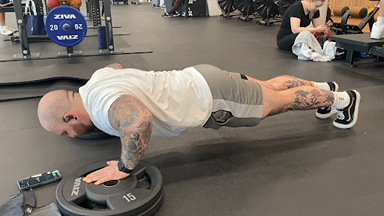
Deficit push-ups are an advanced variation of the standard push-up that increase the range of motion, making your chest, shoulders, and triceps work harder. Instead of keeping your hands on the floor, you place them on raised surfaces.
This creates a “deficit” because your chest can dip lower than your hands, stretching the muscles more deeply before pressing back up.
By moving through this extended range, deficit push-ups build greater strength, muscle activation, and mobility compared to regular push-ups. They’re an excellent bodyweight option for anyone wanting to push past plateaus and develop a stronger, more powerful upper body.
How to do it:
- Use two stable elevated objects (blocks, plates, something safe) to place your hands so that they're lowered relative to your feet.
- Get into plank position, hands on the elevated surfaces.
- Lower chest between your hands as far as comfortable, then push back up.
Grow Your Muscle With These Exercises!
Chest workouts without weights aren’t just great for adults, many of these moves can also be adapted safely for kids. Simple push-up variations can help children develop full-body strength, balance, and coordination, rather than focusing on just one muscle group.
That’s why a well-rounded full-body workout for kids can be both fun and beneficial, laying the foundation for lifelong fitness.
At Rockstar Academy, we bring this philosophy into our Rockfit Program. As the best Sports and Performing Arts Academy, we encourage kids to explore different activities while staying active.
By joining Rockstar Academy, children not only improve their physical fitness but also gain confidence, discipline, and teamwork skills.
Plus, they can look forward to events like RockOlympics, where kids showcase their strength, agility, and spirit in a fun, supportive environment. It’s the perfect blend of fitness, learning, and joy. You can also sign up for our free trial class beforehand too!
FAQ
How long does it take to build noticeable chest strength with these exercises?
It depends on your starting level, consistency, and how hard you push. Generally, with 2-3 well-structured workouts per week, many people see improvement in strength, endurance, and muscle definition in 4-8 weeks.
Can I build muscle (hypertrophy) with bodyweight chest exercises, or do I need weights?
Yes, you can. Studies show that push-ups and equivalent bodyweight movements can produce similar muscle activation and hypertrophy as bench press under some conditions. What matters is pushing close to failure/reps remaining, sufficient volume, and progressive overload.
What if I can’t do a single push-up yet?
No problem. Start with easier variations: incline push-ups (hands elevated), seal push-ups, or even building core strength. Work on partial reps, or negatives (slow lowering). As strength improves, move to full push-ups and harder variations.