101 Guide on How to Choose the Right Preschool

In the exciting journey of parenthood, one of the earliest decisions you'll make is choosing the right preschool for your child. As the first step into the world of education, choosing the right preschool can significantly impact your child's development and future learning experiences.
With a myriad of options available, navigating this decision can be both exhilarating and overwhelming. In this comprehensive guide, we'll delve into the essential factors and considerations to ensure you make an informed choice when it comes to selecting the perfect preschool for your little one.
What Is Preschool?
Preschool, short for pre-kindergarten or nursery school, is an early childhood education program designed for children typically between the ages of three and five years old.
It serves as a bridge between the home environment and formal schooling and preparing young learners for the more structured setting of elementary school.
The primary focus of preschool is to foster a child's social, emotional, cognitive, and physical development in a play-based and nurturing environment. Preschool serves as an integral foundation for a child's educational journey. It also offers a supportive and enriching environment where they can explore, learn, and develop the fundamental skills necessary for success in later academic settings.
Why Is Preschool Important?
Preschool is crucial for a child's development as it provides a structured and nurturing environment that fosters essential skills for later academic success. Beyond early exposure to basic academic concepts, preschool promotes socialization, emotional intelligence, and fine motor skills through play-based learning activities.
It lays the foundation for a positive attitude towards education and enhances communication skills, and helps children develop the ability to work collaboratively. Overall, preschool plays a pivotal role in preparing young learners for the challenges of formal schooling and sets the stage for a lifetime of learning.
How To Choose the Right Preschool?
Choosing the right preschool for your child is a significant decision that involves careful consideration of various factors. As a parent, you undoubtedly want to ensure that this foundational experience sets the stage for a positive and enriching academic and social journey.
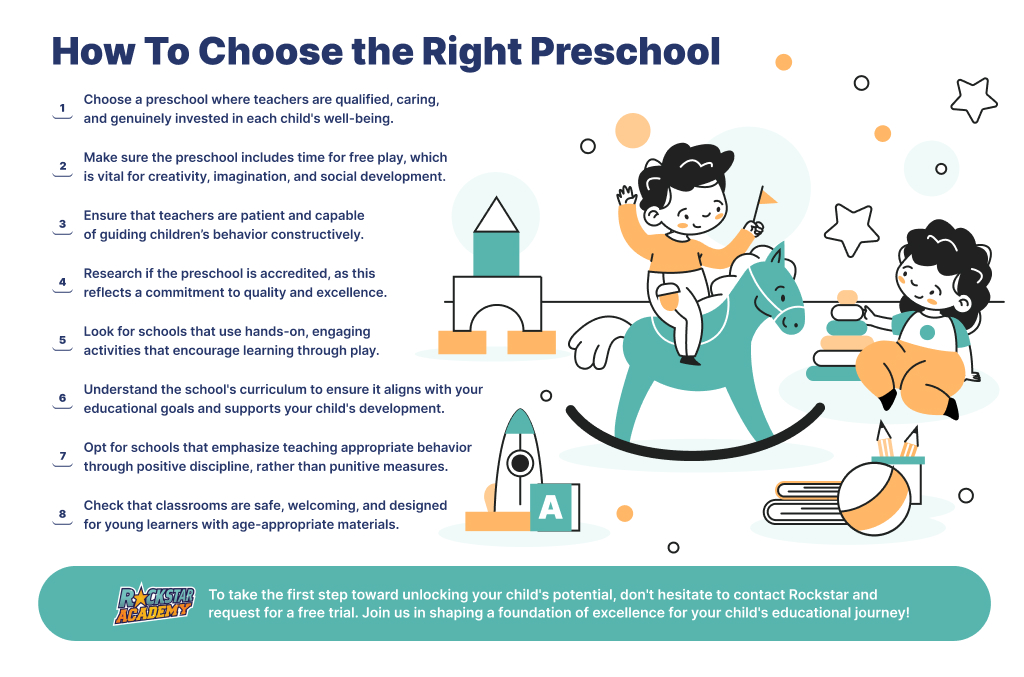
Here are key criteria to guide you in selecting a preschool that aligns with your preferences:
1. Teachers' Approach and Attitude
Look for a preschool where teachers are not only qualified but also demonstrate a positive and caring attitude towards the children. Teachers who are warm, approachable, and genuinely interested in the well-being of each child contribute to a nurturing learning environment.
2. Interactive and Engaging Teaching Methods
Prioritize preschools that employ interactive and engaging teaching methods. Learning through play, hands-on activities, and age-appropriate games fosters a love for learning and supports the development of essential cognitive and motor skills.
3. Positive Discipline Practices
Inquire about the preschool's approach to discipline. Choose a school that emphasizes positive discipline techniques, focusing on teaching appropriate behavior rather than punitive measures. This approach helps create a supportive and encouraging atmosphere for the child's social and emotional growth.
4. Patience and Guidance in Behavior Management
Assess how teachers handle behavioral issues. A preschool where teachers are patient, understanding, and capable of guiding a child's behavior in a constructive manner is crucial. This approach creates a positive learning environment and helps children develop self-control and social skills.
5. Free Playing Time
Ensure that the preschool allows a certain time for free play. Free play is essential for a child's creativity, imagination, and social development. It provides opportunities for children to explore their interests and interact with peers in an unstructured setting.
6. Classrooms Designed for Younger Learners
When touring prospective preschools, pay close attention to the learning environment. Classrooms should be welcoming, safe, and designed to accommodate the needs and interests of younger learners. Look for age-appropriate materials, colorful and interactive displays, and a layout that encourages exploration and play.
7. Learn about Accreditation Programs
Accreditation is a valuable indicator of a preschool's commitment to maintaining high standards of quality and excellence. Research and inquire about accreditation programs that the preschool may be affiliated with, such as those provided by national or regional early childhood education organizations.
Accredited programs often adhere to established guidelines for curriculum, safety, and teacher qualifications.
8. Ask about the Curriculum
Inquire about the preschool's curriculum to ensure it aligns with your educational philosophy and goals for your child. Ask about the balance between structured and unstructured activities and how play is incorporated into the learning process. Understanding the curriculum will help you assess if it resonates with your child's learning style and developmental needs.
Questions to Ask When Choosing a Preschool
Choosing the right preschool is one of the first big decisions parents make for their child. Beyond bright classrooms and friendly smiles, it’s important to understand whether a preschool truly aligns with your family’s values and your child’s needs. Asking the right questions can help you see what happens beyond the first impression.
Below are key questions to ask preschool staff, grouped by the values parents commonly look for in a quality preschool.
1. Safety and Well-Being
- How do you ensure children’s safety during class, playtime, and outdoor activities?
- What is the teacher-to-student ratio in each class?
- How are emergencies handled, and are staff trained in first aid and CPR?
- What is your policy for illness, allergies, and medication?
- How do you help children who are feeling anxious, upset, or having difficulty adjusting?
2. Quality of Teaching and Staff
- What qualifications and training do teachers have?
- How often do teachers receive professional development or training?
- How do teachers support different learning styles and developmental stages?
- Is there consistency in teaching staff, or frequent turnover?
- How do teachers build positive relationships with children?
3. Learning Approach and Curriculum
- What curriculum or learning approach do you follow?
- How do you balance structured learning and play?
- How do you support early literacy, numeracy, and language development?
- How do you encourage creativity, problem-solving, and curiosity?
- How do you assess and track each child’s progress?
4. Social and Emotional Development
- How do you help children develop social skills and confidence?
- How do teachers handle conflicts between children?
- What is your approach to discipline and behavior guidance?
- How do you encourage kindness, respect, and independence?
- How do you support children who may be shy or need extra emotional support?
5. Communication with Parents
- How do you communicate with parents about daily activities and progress?
- Are there regular parent-teacher meetings or progress reports?
- How are concerns or feedback from parents handled?
- Can parents observe or visit the classroom?
- How do you involve parents in school activities or events?
6. Daily Routines and Environment
- What does a typical day look like?
- How much time is spent on outdoor play and physical activity?
- How are meals and snacks handled?
- How do you support toilet training or nap time?
- What facilities and learning materials are available to children?
7. Values and Culture
- What values does the preschool emphasize?
- How do you promote diversity, inclusion, and respect?
- How do you encourage independence and responsibility?
- How do you prepare children for the transition to kindergarten or primary school?
- What makes your preschool unique compared to others?
Already Know How to Choose the Right Preschool?
The journey of choosing the right preschool is a meaningful investment in your child's growth and well-being. Embrace the opportunity to be an active participant in their educational journey, and rest assured that a well-informed decision today will pave the way for a bright and promising tomorrow.
Rockstar Academy stands as a trusted supporter in children’s early education. We offer an innovative and complete approach to child development. As a premier Sports & Performing Arts Academy, Rockstar Academy prioritizes the well-rounded growth of young learners. Their early childhood program is designed to nurture not only academic skills but also physical fitness and social-emotional well-being.
To take the first step toward unlocking your child's potential, don't hesitate to contact Rockstar and request for a free trial. Join us in shaping a foundation of excellence for your child's educational journey!
FAQ
What kind of preschool is best for my child?
Deciding on the best preschool for your child involves considering various factors that align with their unique needs and your family values. The ideal preschool will prioritize a balanced approach, incorporating both structured learning and play-based activities.
What is most important in a preschool?
The most important aspects in a preschool include a safe and nurturing environment, qualified and caring teachers, a well-rounded curriculum that fosters both academic and social development, and facilities that promote exploration and play.