Why Are Children So Curious? Signs, Stages, and Activities to Fuel Their Developing Brain
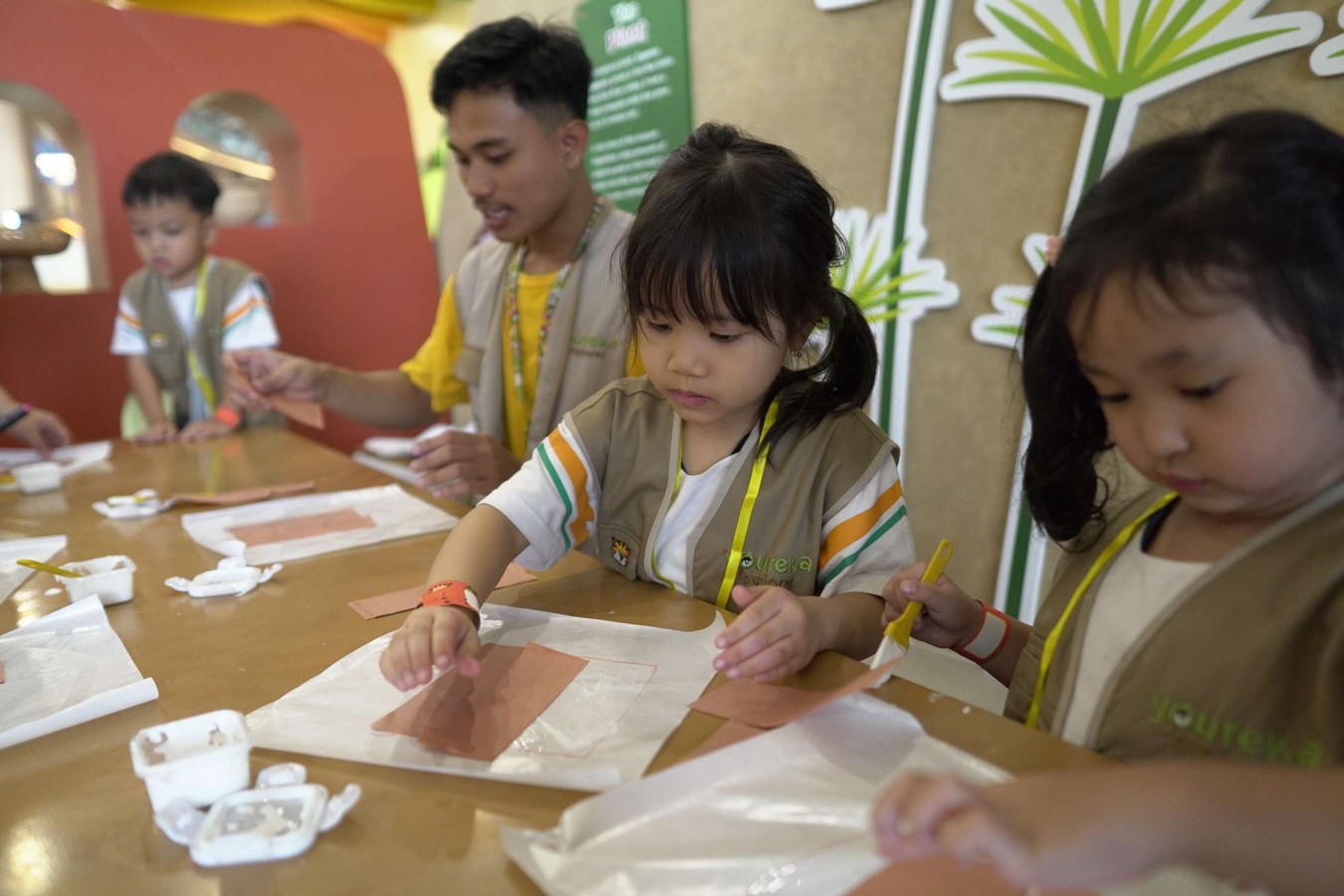
Curiosity is one of the most magical things about childhood. Ask any parent, teacher, or babysitter—they’ve all been through the rapid-fire “Why? Why? Why?” phase. Children can turn the simplest moment (like spotting a bug on the floor) into a whole scientific investigation. And honestly, it’s adorable until they dismantle your TV remote to “see what’s inside.”
But here’s the good news: this curiosity isn’t just cute. It actually shapes the way children think, learn, explore, and understand the world. In this article, let’s explore why kids are naturally curious, how to recognize it, why parents should nurture it, and the best activities to help that.
Why are Children So Curious?
Here are several reasons on why are children so curious:
1. Their Brains Are Wired for Exploration
From birth, children’s brains are like supercomputers in development. They’re busy forming neural connections especially in the early years. Curiosity is the fuel that powers this process, especially their executive function.
When kids explore, touch things, open drawers, ask questions, and experiment, their brains strengthen pathways related to problem-solving, memory, and critical thinking.
2. Everything Is New to Them
Adults walk around thinking everything is “normal”—trees are green, sky is blue, cats say meow, toast pops out of a toaster. But to a child? It’s all fascinating.
Think of children as tiny explorers entering a brand-new planet. They’re constantly trying to figure out the rules of this world. That’s why they press buttons, pick up objects, taste random things, and ask endless questions.
3. Curiosity Helps Them Survive and Adapt
In evolutionary terms, curiosity drives learning, and learning helps survival. Children are built to learn through trying, observing, touching, smelling, hearing, and doing. Curiosity helps them pick up languages, understand emotions, learn social rules, and develop motor skills.
4. They Want to Understand How Things Work
Children don’t explore just for fun (although it is fun). Their minds are naturally scientific and they want to understand cause and effect:
- What happens if I drop this?
- What happens if I press that?
- What happens if I mix water and dirt?
- What happens if I ask Mom the same question 10 times?
Through testing, experimenting, and observing reactions, they learn patterns, logic, and consequences.
Signs That Show Children Are Naturally Curious
Even if children express curiosity differently, here are common signs that indicate a child has a naturally inquisitive mind:
1. They Ask a Lot of Questions
“Why?” “How?” “What’s that?” “Where are we going?”
If your child sounds like a tiny detective, that’s a perfect sign their brain is trying to understand the world.
2. They Love to Explore
Curious kids don’t stay still for long. They:
- Open cabinets
- Investigate new objects
- Wander around a room
- Touch items to see how they feel
- They’re basically conducting experiments all day long.
3. They Show Strong Interests
Some children become fascinated by specific topics: dinosaurs, cars, insects, planets, cooking, or anything else. They may spend hours talking about it, watching it, or playing with objects related to it.
4. They Notice Small Details
A curious child might spot tiny things adults overlook—a little ant on the floor, a crack on the wall, a new sticker on your laptop. Their attention to detail is a sign of active observation skills.
5. They Enjoy Trying New Things
New foods, new games, new toys, and new books will peak their interests. Curious kids simply love new experiences.
6. They Tinker, Build, and Take Things Apart
If your child loves Legos, puzzles, crafts, or “fixing” things, it shows their brain enjoys figuring out how things work.
7. They Ask to Do Things Independently
Curious children often say:
- “Let me try!”
- “I can do it!”
- “Let me see!”
This desire for independence is connected to their motivation to learn and explore.
Stages of Curiosity Throughout Childhood
Here’s a deeper look at how curiosity unfolds in daily life:
1. Infants (0–1 Year)
At this stage, everything babies learn comes through their senses. Their brains are absorbing information like sponges, and sensory exploration teaches them the basics of cause and effect.
What Curiosity Looks Like:
- Reaching for objects with different textures
- Putting items in their mouth to explore taste and shape
- Turning their head toward sounds
- Smiling or giggling at new sensory experiences
- Repeating actions that produce fun results
2. Toddlers (1–3 Years)
Once toddlers learn to walk, climb, and run, they start exploring like little adventurers on a mission. They imitate adults, test boundaries, and repeat actions to understand how things work.
What Curiosity Looks Like:
- Exploring every corner of the house
- Opening drawers, cabinets, and containers
- Copying adult behavior
- Engaging in simple problem-solving
- Wanting to do everything independently
3. Preschoolers (3–5 Years)
This is the golden age of curiosity. Preschoolers want explanations for everything.
What Curiosity Looks Like:
- Asking endless “Why?” and “How?” questions
- Experimenting through pretend scenarios
- Creating imaginative stories or worlds
- Playing with friends and exploring social rules
- Making guesses and predictions about things
4. Early School Age (6–9 Years)
At this age, children become little scientists and creators. They start showing strong interests and hobbies. They ask deeper questions and begin to understand logical sequences.
What Curiosity Looks Like:
- Developing hobbies and wanting to know everything about them
- Conducting experiments intentionally
- Asking how and why things function
- Becoming more observant of details
- Wanting to solve problems or build things
5. Pre-teens (10–12 Years
Pre-teens start thinking more like young adults. Their curiosity expands beyond physical objects to topics like friendships, emotions, fairness, world issues, and how systems work. They love asking questions that require reasoning.
What Curiosity Looks Like:
- Interest in deeper scientific ideas or real-world topics
- Curiosity about friendships, conflict, and social dynamics
- Strong desire for independence
- Interest in creative outlets
- Questioning rules or decisions to understand the logic behind them
Activities to Encourage and Grow Children’s Curiosity
Curiosity thrives when children are given the space, tools, and freedom to explore. These activities are powerful not because they’re complicated, but because they invite children to experiment, think, discover, and wonder. Here’s how parents can nurture curiosity at home through simple yet meaningful play.
1. Sensory Play Activities
Sensory play is a child’s first science laboratory. Babies and toddlers learn about the world not by watching; but by touching, squishing, splashing, tasting, and listening. Sensory activities stimulate their senses and help them make sense of textures, temperatures, shapes, and sounds.
Some ideas include:
- Water play
- Sand, rice, or pasta bins
- Playdough
- Texture exploration
2. Nature Walk Exploration
The outdoors is a giant classroom and everything inside it sparks curiosity. Nature walks don’t have to be long or elaborate; even a stroll around your neighborhood offers endless discoveries.
Ways to make nature walks more engaging:
- Leaf collecting
- Bug hunting
- Animal observation
- Plant exploration
- Listening exercise
3. Pretend Play and Role-Playing
Pretend play is more powerful than it looks. When children act out roles, they’re practicing problem-solving, emotional understanding, storytelling, and real-world thinking.
Fun pretend play scenarios:
- Doctor: Treating stuffed animals builds empathy and understanding of health.
- Chef: Cooking pretend meals teaches sequencing (first chop, then cook).
- Engineer: Building bridges or cities using blocks or boxes.
- Teacher: Teaching dolls or siblings encourages leadership and confidence.
- Astronaut: Exploring “space” using pillows and blankets sparks scientific curiosity.
- Shopkeeper: Learning simple math (buying/selling) and social skills.
4. Reading and Storytelling
Books expose children to worlds beyond their reach. Reading doesn’t just build language but also encourages wondering, questioning, imagining, and reasoning.
Choose a mix of:
- Storybooks (to spark imagination)
- Science books (to explore how things work)
- Picture books (to observe details)
- Kid encyclopedias (to feed specific interests)
Questions you can ask after reading:
- “What do you think will happen next?”
- “Why did the character choose that?”
- “If you were in this story, what would you do?”
- “What part surprised you the most?”
5. Science Experiments at Home
Science is curiosity in action. Simple experiments show children how objects, materials, and forces behave.
Some easy experiments to try:
- Baking soda and vinegar volcano
- Growing beans in a clear cup
- Melting ice with salt
- Marshmallow and toothpick structures
6. Ask Them Open-Ended Questions
One of the easiest ways to grow curiosity doesn’t require toys, tools, or money—just conversation. Open-ended questions invite children to think deeply, imagine possibilities, and express ideas.
Questions to ask during play or daily routines:
- “What do you think will happen if we try this?”
- “Why do you think that happens?”
- “How can we figure this out?”
- “What else could we do?”
- “What does this remind you of?”
Instead of giving them the answer right away, guide them to think, guess, or explore.
7. Encourage Independent Projects
Nothing builds curiosity like giving a child the freedom to explore something they are interested in. Independent projects help kids develop initiative, responsibility, and creativity. Projects can be small, simple, and enjoyable, but the learning they trigger is huge.
Let Their Imagination Soar with the Right Early Education
Curiosity is one of the strongest forces driving a child’s learning journey, and when it’s nurtured with the right support, it can lead to incredible growth. If you’re searching for the best early childhood education to help your child explore, question, and thrive, try the Preschool & Kindergarten at Rockstar Academy.
Only at Rockstar Academy can your child experience a meaningful blend of classroom learning, diverse physical activities, and exciting events & competitions for all ages, skill levels, and interests—including the prestigious Elite Championships.
With guidance from experienced teachers, every activity helps your child become more adaptive, confident, and eager to learn. And if you’d like to see it all firsthand, you can sign up for a free trial class before enrolling. Enroll your children now!
FAQ
Is it normal for children to ask thousands of questions a day?
Absolutely! Question-asking is a healthy and important sign of cognitive development.
What if my child seems too curious and touching everything?
Just remember to set safe boundaries, but don’t shut down their curiosity. You can offer safe alternatives and redirect when necessary.
Can curiosity be taught?
Yes! While curiosity is natural, parents can strengthen it through encouragement, exposure, and supportive guidance.