Mastering the Battement Fondu: A Guide to Fluid Ballet Technique
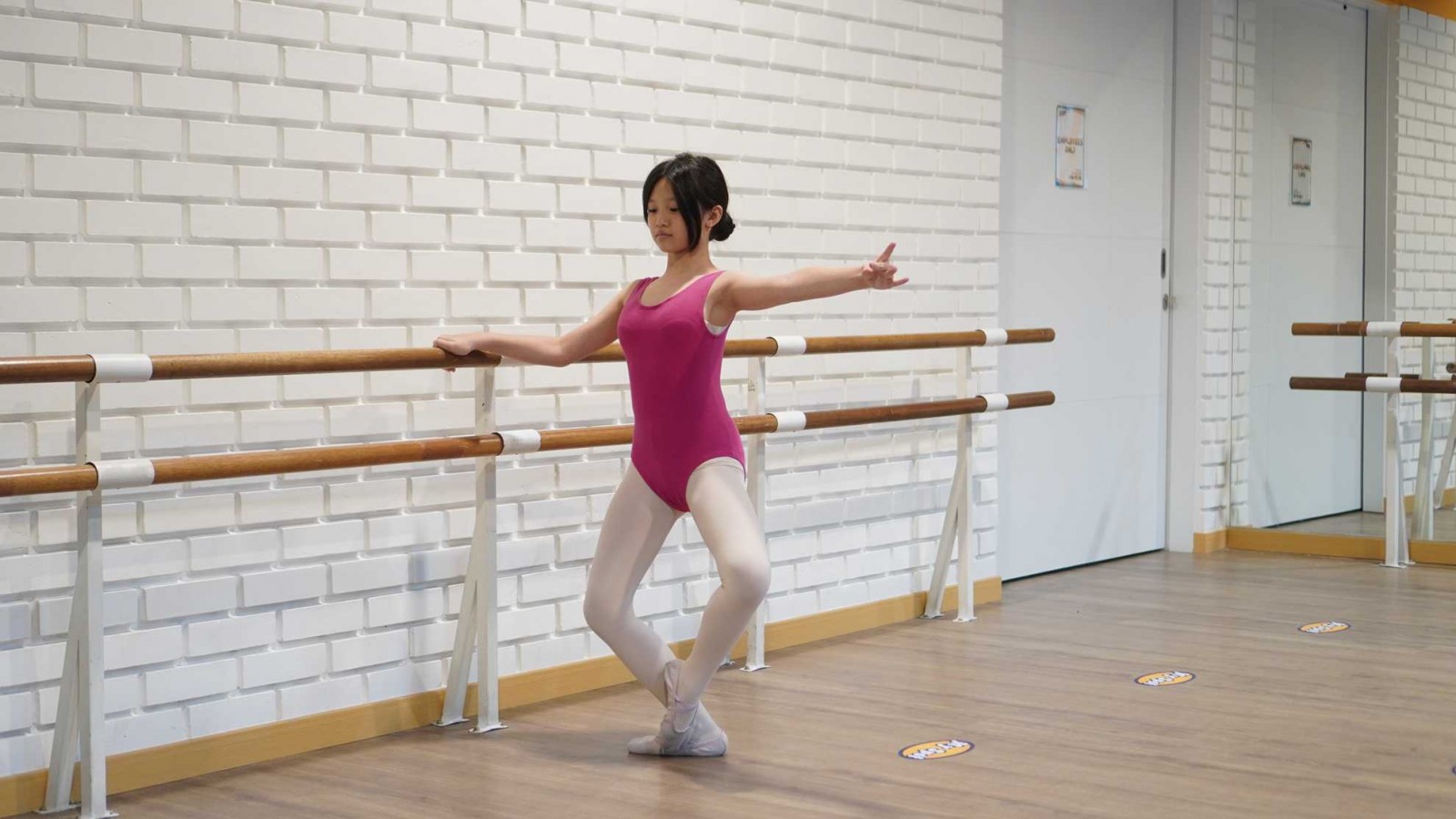
Ballet is built on precise movements that combine strength, control, and elegance, and one essential exercise that reflects these qualities is the battement fondu ballet. Known for its smooth motion, this step is important for developing balance, coordination, and lower-body strength.
In classical training, battement fondu acts as a bridge between basic exercises and more advanced techniques such as jumps, turns, and extended leg lines. Because it requires one leg to bend while the other extends, the movement helps dancers build fluid coordination and strong foundational technique. Let’s learn more about fondu ballet here!
What Is a Battement Fondu in Ballet?
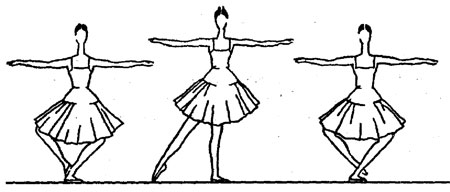
In ballet terminology, battement fondu comes from French and means “melted beating” or “sinking movement.” The term fondu refers to the soft, controlled bending of the supporting leg, creating a smooth and fluid quality in the step.
Technically, battement fondu involves bending the supporting leg into a demi-plié while the working foot is placed at cou-de-pied either in front or back of the ankle. Both legs then straighten at the same time as the working leg extends outward, either à terre with the toes touching the floor or en l’air with the leg lifted.
The movement is usually performed en face or en croix, to the front, side, and back and is often considered the single-leg equivalent of a plié because it highlights the connection between bending and stretching in ballet technique.
The Role of the Plié in Battement Fondu
The battement fondu begins with a demi-plié, which is why understanding the plie ballet concept is essential. A plié refers to the bending of the knees while maintaining proper turnout and alignment.
In battement fondu, the supporting leg performs a demi-plié while the working foot pressed at the ankle in sur le cou-de-pied position. The dancer then straightens the supporting leg as the working leg extends outward.
One of the most important technical ideas is that both actions happen simultaneously:
- Supporting leg bends: working foot actively pressed to sur le cou-de-pied the ankle
- Supporting leg straightens: working leg extends
This coordination creates the smooth melting quality that defines the movement.
Another key principle is that the plié should not simply be about bending deeper. Instead, the dancer should prioritize maintaining turnout from the hips, allowing the knees to open outward naturally as they bend.
Step-by-Step Execution of Battement Fondu
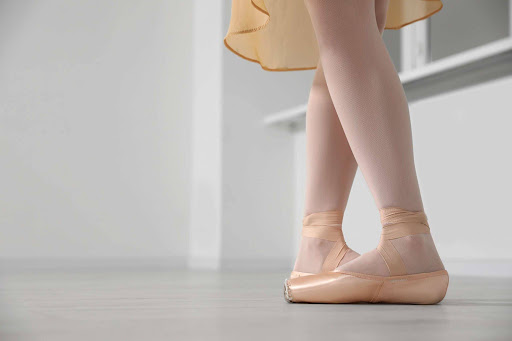
To perform a battement fondu correctly, dancers usually begin from fifth position at the barre. The movement can then be broken down into several phases.
1. Starting Position
Begin in fifth position, with the feet turned out and the spine tall. The upper body should remain lifted and stable.
The working foot moves to sur le cou-de-pied, placing the pointed toes gently at the ankle of the supporting leg.
Key alignment points:
- Hips remain square
- Shoulders pushing down
- Spine lengthened upward
2. Bend the Supporting Leg
The supporting leg slowly bends into a demi-plié, maintaining turnout and keeping the heels grounded.
At the same time:
- The working foot stays lightly connected to the ankle
- The torso remains upright and stable
3. Extend Both Legs
Next, the dancer straightens the supporting leg while simultaneously extending the working leg outward.
The working leg can extend:
- Devant (front)
- À la seconde (side)
- Derrière (back)
The leg should stretch fully through the knee, ankle, and toes to create a long line.
4. Return to the Starting Position
After the extension, the working leg returns smoothly to the starting position, either closing into fifth or returning to cou-de-pied for another repetition.
Maintaining Balance During Battement Fondu
Balance is one of the most challenging aspects of battement fondu because the dancer moves from two legs to a deeply bent supporting leg and then back to full extension.
Here are several key strategies to maintain stability.
- Keep the Spine Lifted
Maintain an upright posture by lengthening the spine upward while the legs move below. This helps prevent collapsing into the plié and keeps the body aligned and stable.
- Engage the Core
Activate the core muscles to stabilize the torso and prevent the body from leaning forward or sideways. A strong core helps maintain control throughout the movement.
- Control the Speed
Perform battement fondu slowly during training to focus on smooth coordination and precise control rather than relying on momentum.
- Keep Weight Centered
Keep your body weight directly over the supporting foot to maintain balance and avoid shifting the hips or leaning forward.
Learn Vaganova Ballet Technique With Rockstar Academy!
Mastering a movement like battement fondu is only the beginning of a dancer’s journey. To truly develop technique, confidence, and stage presence, structured training with professional guidance is essential. That’s why many dancers choose Rockstar Academy, a leading Sports & Performing Arts Academy that offers internationally structured ballet programs for students of various ages and levels.
With professional instructors, international curriculums, and modern facilities, the academy provides a supportive environment where students can build strong ballet fundamentals while exploring their artistic potential.
We also offer progressive ballet levels from beginner classes to advanced training based on the Vaganova Method, designed to continuously improve technique, posture, musicality, and performance skills.
To help students track their development, Rockstar Academy also conducts RAD Ballet Testing, Ballet & Contemporary Dance Recital, Elite Championships, and RockOlympics, exciting performance and competition experiences that help children discover their true potential, develop confidence, and shine on stage.
These tests assess technique, skills, and overall progress, helping dancers move confidently to the next level.
If you’re ready to experience professional ballet training in a supportive and inspiring environment, now is the perfect time to take the first step. Join a class and experience the training yourself through a free trial ballet class at Rockstar Academy!
FAQ
What does battement fondu mean in ballet?
Battement fondu means “melting battement” in French. It refers to a movement where the supporting leg bends while the working leg extends outward as both legs straighten together.
Is battement fondu a beginner step?
It is usually introduced at beginner levels but remains important even for advanced dancers. The movement teaches coordination, turnout, and balance.
Why is battement fondu practiced at the barre?
The barre provides support so dancers can focus on technique, alignment, and coordination without worrying about balance during early training.