Key Differences Between Acting for the Camera vs. Stage

Acting requires emotional truth, strong character understanding, and technical skill, but the approach can differ greatly depending on whether a performer is acting on stage or in front of a camera.
While both forms aim to bring characters to life, they require different techniques in performance style, vocal projection, and physical movement.
Today, we’ll explore the key differences between these two acting styles, focusing on how performers adapt their voice, movement, and technique for each medium.
What is Acting for The Camera vs. Stage?

Stage acting takes place in live theatre productions where actors perform directly in front of an audience, often in large venues. Because viewers may sit far from the stage, performers must project their voices clearly and use visible gestures and expressions.
The performance also happens continuously in real time without retakes, requiring actors to stay focused from beginning to end.
In contrast, acting for the camera is used in film, television, and digital media, where actors perform for a camera rather than a live audience. Since cameras capture close-ups and subtle details, screen acting is typically more natural and restrained, and scenes can be filmed multiple times and edited together later.
Performance Style Differences
One of the most noticeable differences between stage and screen acting is the size and style of the performance.
1. Stage Acting: Larger and More Expressive

Stage performances generally require bigger, more expressive acting choices. Since audiences are watching from a distance, actors must amplify their facial expressions, gestures, and emotional reactions so they can be understood clearly.
This does not mean overacting, but rather performing in a way that communicates clearly across a large space. For example, a gesture that seems normal in everyday conversation might appear too small for theatre.
Stage actors often rely on strong physical storytelling and clear emotional signals to ensure every audience member can follow the performance.
2. Screen Acting: Subtle and Natural
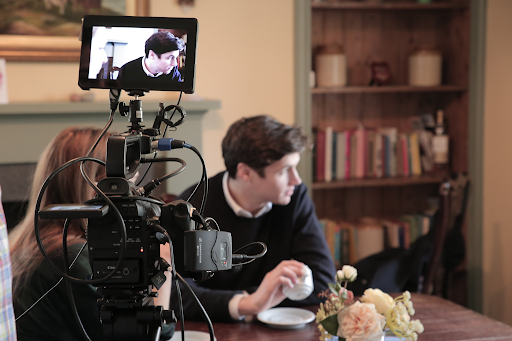
On screen, the camera becomes your audience and it sees everything. Even the smallest eye movement or slight change in expression can carry meaning. Because of this, screen acting is all about subtlety and realism.
Big gestures or exaggerated expressions that work on stage can feel too much on camera. Instead, actors focus on internal emotions and let those feelings naturally show through small, controlled movements.
For example, if your character is nervous:
- On stage, you might pace, fidget, or use noticeable gestures.
- On screen, it could be as simple as a brief glance away, a quiet inhale, or a slight tension in your jaw.
The key is to think about the emotion, not show it. When you genuinely feel something, the camera picks it up.
Vocal Projection Differences: Stage vs Camera
Another major difference between stage and screen acting involves how actors use their voice.
1. Vocal Projection in Stage Acting
On stage, your voice needs to travel—all the way to the back row. And in many cases, you’re doing this without relying on a microphone. That’s why stage actors train their voices almost like athletes train their bodies.
The key is projection, not shouting. Projection comes from proper breathing—specifically using your diaphragm (the muscle below your lungs) to support your voice. This allows you to speak loudly and clearly without straining your throat.
If you simply yell a line like “Wait, don’t go!”, your voice might sound harsh and you’ll get tired quickly.
But with proper projection, the same line sounds strong, controlled, emotional and you can repeat it night after night without damaging your voice.
2. Vocal Delivery in Screen Acting
On camera, everything changes. You’re usually wearing a mic or standing close to one, so there’s no need to project your voice across a big space. In fact, too much projection can sound unnatural on screen.
Instead, screen acting focuses on natural, conversational speech where the way people actually talk in real life.
For example, a line like “I miss you” on stage might be spoken clearly and projected with strong emotion.
On screen, it could be much softer—almost like a whisper—with a slight pause or breath that makes it feel more intimate and real.
Physical Movement and Body Language
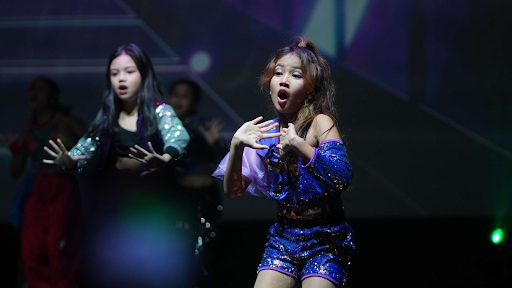
Body language and movement are also used differently in stage and screen performances.
1. Physical Movement in Stage Acting
Stage actors must use larger movements and gestures to communicate clearly with the audience. Since viewers may be seated many meters away, small movements might not be visible.
As a result, stage actors often use:
- Pronounced gestures
- Clear posture and stance
- Strong physical storytelling
- Full use of the stage space
2. Physical Movement in Screen Acting
In screen acting, movement is much more controlled and subtle. The camera frame may capture only the actor’s face or upper body, so even small gestures become noticeable.
For example:
- A slight eyebrow movement can express emotion
- A small shift in posture can signal tension
- Minimal gestures may be more effective than large movements
Now You Understand Acting for The Camera vs. Stage!
This is where Rockstar Academy can help aspiring performers sharpen their skills. As a well-established Sports & Performing Arts Academy, Rockstar Academy offers a comprehensive Broadway program where students learn acting, singing, and performance techniques inspired by musical theatre training.
Through structured classes and experienced instructors, students can build confidence, creativity, and the ability to perform both on stage and in front of an audience.
Beyond regular training, Rockstar Academy also encourages students to showcase their talents through exciting Broadway Recital, Elite Championships, and RockOlympics, giving them real opportunities to apply what they learn in class.
These experiences help students develop stronger stage presence, teamwork, and storytelling abilities. If you’re ready to take your performance skills to the next level and master acting techniques, now is the perfect time to start.
Ready to take the stage and own it? Sign up for a free trial Broadway class at Rockstar Academy and experience how professional training in acting, singing, and musical theatre can transform you into a more confident, expressive, and stage-ready performer!
FAQ
What is the main difference between stage acting and screen acting?
The main difference is the scale of performance. Stage acting requires larger gestures and stronger vocal projection, while screen acting relies on subtle expressions and natural speech.
Do actors need different training for stage and film?
Yes. Actors often train in both techniques because each medium requires different vocal, physical, and technical skills.
Why is screen acting more subtle?
The camera captures small details like facial expressions and eye movements, so subtle acting appears more realistic on screen.
Why do stage actors project their voices?
Stage actors must ensure that their dialogue reaches every audience member, including those seated far from the stage.