How to Dive Start to Swim: Progression Drills and Expert Tips for Speed
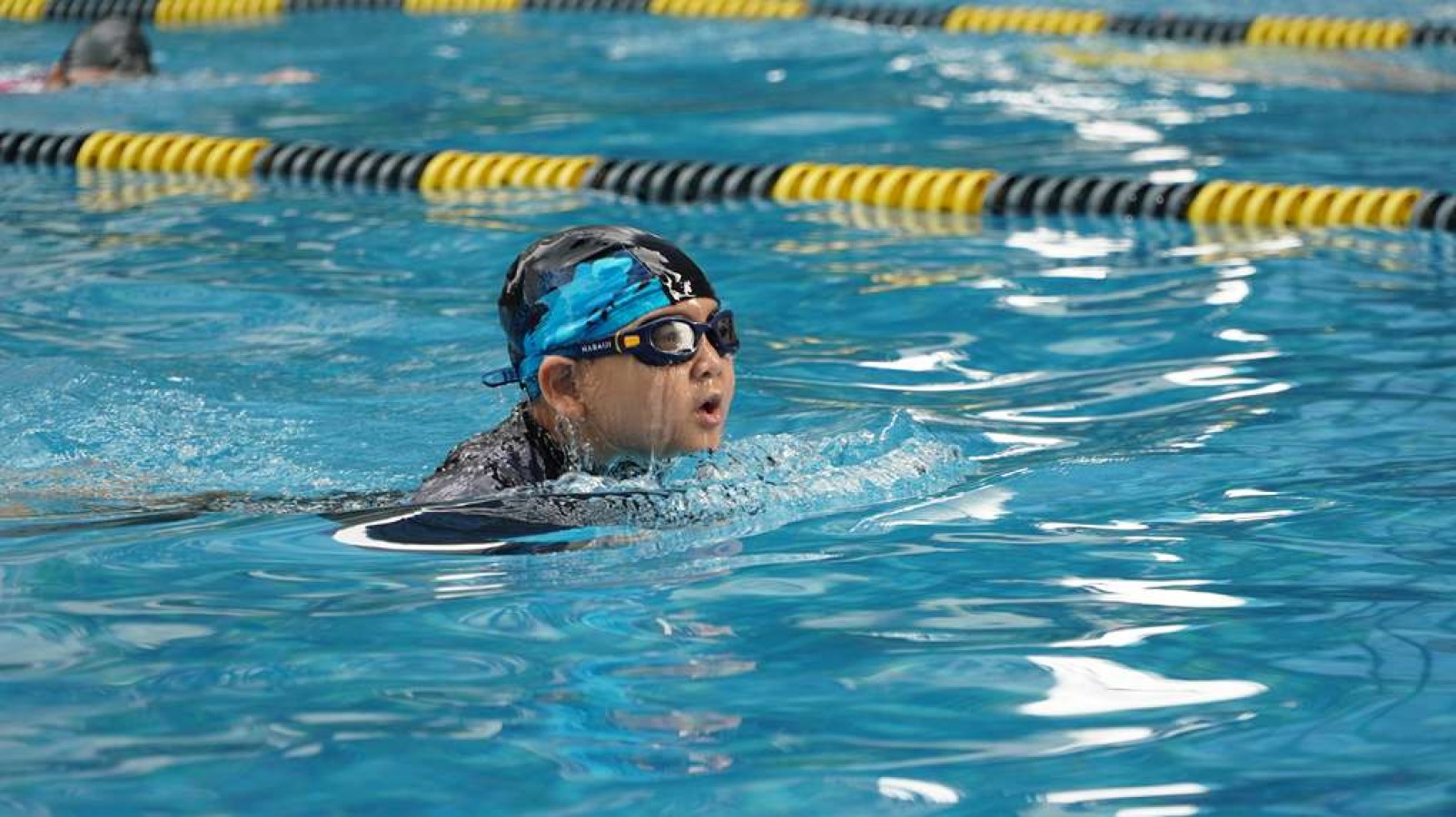
The explosive moment at the start of a race is the swimming dive start, and it can make a huge difference in swimming speed and confidence.
Whether you’re a beginner swimmer, a young athlete, or a parent helping your child improve in swimming, learning how to dive properly is a game-changer. A good dive start helps swimmers enter the water smoothly, gain speed early, and feel more confident during races and training.
Why Is the Dive Start So Important?
The dive start may only last a few seconds, but it can:
- Give swimmers an early speed advantage and swim faster
- Improve overall race time
- Build confidence during competitions
- Teach body control and coordination
For young swimmers, mastering the dive start also helps develop bravery, spatial awareness, and discipline in the water.
Safety First: Before Learning the Dive Start for Swimming
Before practicing dive starts, swimmers should:
- Be confident floating and swimming independently
- Be comfortable putting their face underwater
- Understand basic pool safety rules
- Practice only in deep water with supervision
If you’re teaching children, always start slow and prioritize safety over speed.
Understanding the Basic Dive Start Position
Before jumping into drills, let’s understand the basic body position.
1. Starting Position
- Toes curled over the pool edge or starting block
- Feet shoulder-width apart (or one foot forward for track start)
- Knees bent slightly
- Arms relaxed and ready to swing
2. Body Lean
- Lean slightly forward
- Head neutral (not looking up or down)
3. Takeoff
- Push hard with the legs
- Swing arms forward
- Body moves forward—not straight down
Progression Drills to Learn Dive Start Safely
Learning a dive start should always follow a clear, step-by-step progression. Each drill builds confidence, body awareness, and correct technique. Here’s what you can do:
Drill 1: Streamline Practice (On Land & In Water)
.png)
Before swimmers ever leave the pool edge, they must first master the streamline position. This is the foundation of every good dive start and underwater movement.
How to do it:
- Arms straight overhead
- Hands stacked (one on top of the other)
- Squeeze ears with arms
- Tight core and straight legs
Drill 2: Sitting Dives (Beginner-Friendly)
.png)
Sitting dives are one of the safest and most confidence-building drills, especially for beginners and young swimmers. This drill removes height and fear while still teaching proper entry technique.
How to do it:
- Sit on the pool edge
- Arms in streamline
- Lean forward and gently slide into the water
Drill 3: Kneeling Dives
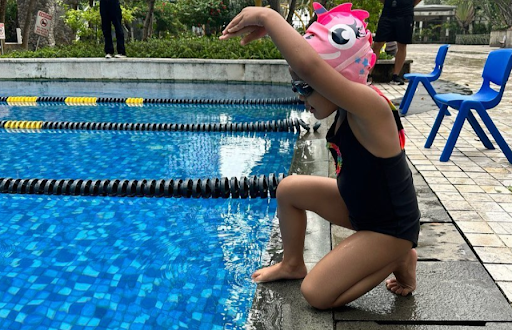
Once sitting dives feel comfortable, kneeling dives add a small amount of height and power while still keeping things safe and controlled.
How to do it:
- Kneel at the pool edge
- Arms in streamline
- Lean forward and push gently
- The movement should be smooth—not rushed or forceful.
Drill 4: Standing Jump to Streamline
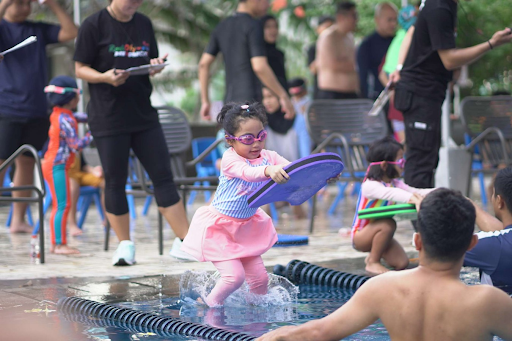
Before attempting a full dive start, swimmers should practice jumping forward while maintaining a tight streamline position. This drill focuses on direction and body alignment rather than diving technique.
How to do it:
- Stand at the pool edge
- Jump forward (not up)
- Enter water in streamline position
Drill 5: Standing Dives
Now swimmers are ready for true dive starts. At this stage, technique matters more than power.
How to do it:
- Stand at the edge
- Arms swing forward
- Push off with legs
- Enter hands first, body straight
- Start slow and controlled before adding power.
Expert Tips to Perfect Your Dive Start
Below are expert-approved tips to help swimmers understand and apply them correctly.
1. Think Forward, Not Down
One of the most common mistakes swimmers make is diving downward instead of forward.
When you dive straight down, your body sinks too quickly, loses speed, and creates a big splash. A good dive start should send your body gliding forward across the surface, not dropping vertically into the water.
2. Tight Core = Faster Entry
Your core (stomach, lower back, and hips) plays a huge role in your dive start. A loose core causes your body to bend in the middle, leading to:
- Big splashes
- Slow water entry
- Poor balance
- A tight core keeps your body straight like a pencil.
How to apply it:
Before diving, gently tighten your stomach muscles as if you’re about to laugh or cough. Keep that tension from takeoff all the way through water entry.
3. Hands Enter First
The correct dive entry order is:
Hands → head → body → legs
Your hands should always break the water first, creating a small “hole” for the rest of your body to slide through.
4. Keep Your Head Neutral
Lifting your head during a dive is a very common habit, especially for nervous swimmers. Unfortunately, this small mistake can ruin an otherwise good dive.
When the head lifts:
- The hips drop
- The body bends
- More splash is created
How to apply it:
Your head should stay neutral, meaning:
- Chin slightly tucked
- Eyes looking down or forward through your arms
- Ears squeezed by your arms
- Let your arms lead the dive as your head simply follows.
5. Practice Consistently
Dive starts are a skill, and like any skill, they improve with regular, focused practice.
Doing a few quality dives each practice is far more effective than doing many dives while tired or unfocused. Fatigue often leads to sloppy technique and bad habits.
How to apply it:
- Practice 5–10 dive starts per session
- Focus on one correction at a time
- Rest briefly between dives to reset technique
Ready to Help Your Child Dive into Success?
If you want your children to truly improve in swimming with the right guidance and structured training, parents are encouraged to enroll them in the swimming program at Rockstar Academy.
As the best Sports & Performing Arts Academy, Rockstar Academy offers a wide range of physical activity programs designed to help children grow not only as athletes, but also as confident individuals.
With a well-structured curriculum, students have the exciting opportunity to participate in RockOlympics—an amazing learning experience that allows them to challenge themselves, build confidence, and discover their true potential.
Additionally, Rockstar Academy also offers Private Instruction, a highly personalized, skills-based training program focused on each student’s individual needs and goals. Through intensive one-on-one training, continuous instructor feedback and guidance, progress reports, training videos, and weekly at-home exercises, students receive the support they need to thrive now and in the future.
Curious to see the difference? Join our free trial class and let your child take the first powerful dive toward growth, confidence, and success—only at Rockstar Academy.
FAQ
At what age can children learn to dive and swim?
Most children can start learning basic dive progressions around 5–6 years old, as long as they are confident swimmers and practice in deep water with supervision.
Is dive start dangerous for beginners?
Not if taught correctly. Using proper progressions (sitting, kneeling, standing) makes dive starts safe and confidence-building.
Do all swim races require a dive start?
No. Backstroke starts in the water. Freestyle drills, butterfly, and breaststroke usually start with a dive.