How Do You Teach Writing to Your Kids: Here Are The Tips

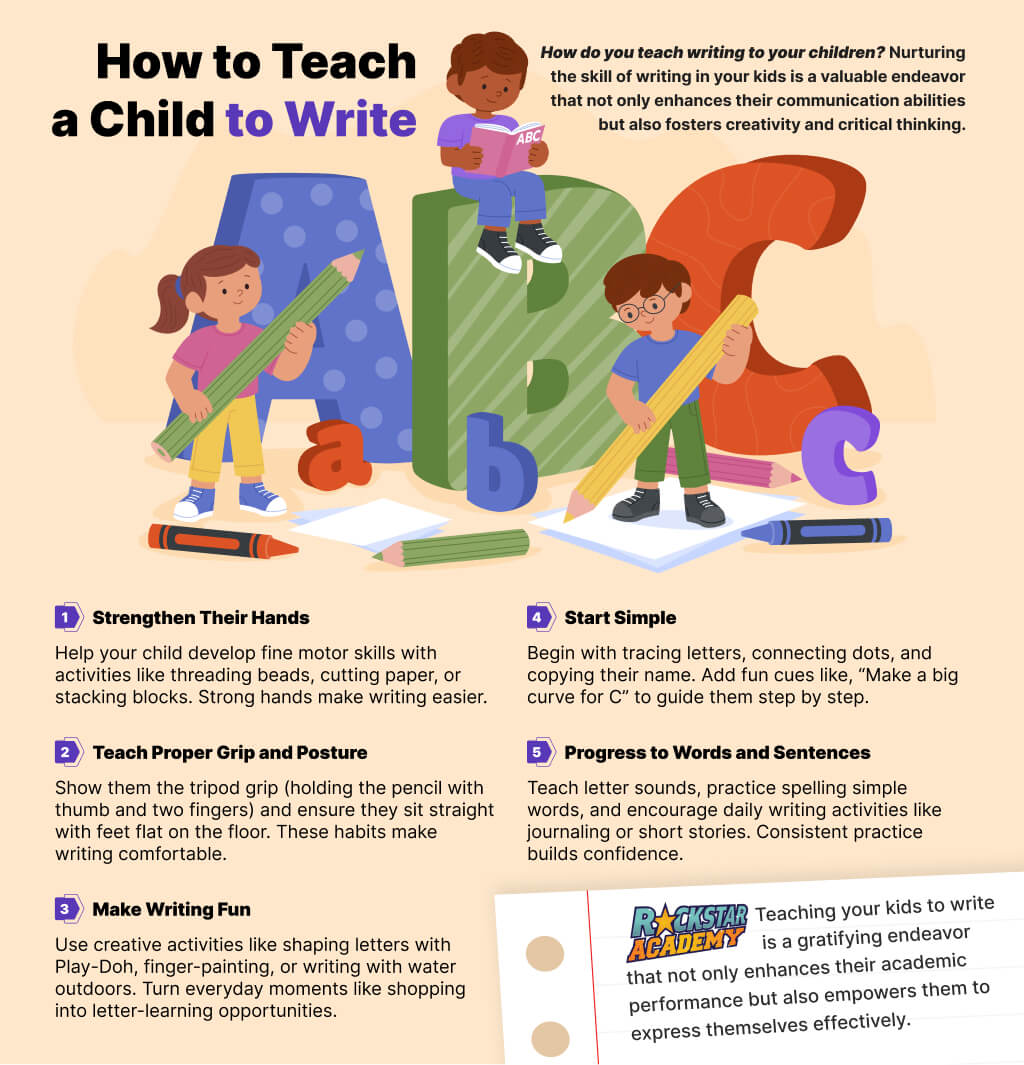
How do you teach writing to your children? Nurturing the skill of writing in your kids is a valuable endeavor that not only enhances their communication abilities but also fosters creativity and critical thinking.
As parents and educators, there are effective strategies you can employ to make the writing process an engaging and enjoyable experience for your young learners. In this article, we'll explore key tips and approaches to teach your kids the art of writing, laying the foundation for their academic success and lifelong communication skills.
How to Teach a Child to Write
Teaching a child to write is a crucial developmental milestone that sets the stage for effective communication and academic success. Here are some practical and engaging strategies to guide you in nurturing your child's writing skills:
1. Strengthening Hands to Prepare for Writing
Before children are ready to write letters, they must first develop strong fingers, hands, and hand–eye coordination. Writing requires small, controlled movements, and these skills don’t develop automatically—they need to be taught and practiced through play.
To support this, introduce fun activities that strengthen fine motor skills, such as threading beads, cutting with child-safe scissors, squeezing playdough, or stacking and building with blocks. These activities train the muscles children will later use to hold a pencil, draw lines, and form letters. By building hand strength early, children will find writing less tiring and more enjoyable.
2. Teaching the Right Grip and Writing Posture
Once children begin using pencils or crayons, it’s important to teach them how to hold and use these tools correctly. The tripod grip—holding the pencil between the thumb and the first two fingers—is ideal for control and comfort. Show this grip slowly, guide your child’s hand if needed, and allow plenty of practice without pressure.
Equally important is teaching proper posture. Encourage children to sit upright with their back straight, feet flat on the floor, and the paper placed at a comfortable angle. Good posture helps children focus, reduces fatigue, and improves pencil control.
Gently observe and correct grip and posture during writing activities. Early guidance helps prevent habits that could make writing difficult later on and builds a strong foundation for confident, effective writing.
3. Teach a Child to Write by Age
Teaching a child to write is about guiding them step by step with patience, encouragement, and joy. When writing feels fun and achievable, children naturally grow into confident and capable writers.
Ages 3–4: Building the Foundation
At this age, children are not expected to write letters yet. The main goal is to prepare their hands and minds for writing through play and exploration.
What to focus on:
- Strengthening fine motor skills
- Hand–eye coordination
- Recognizing shapes, lines, and patterns
How to teach:
- Let children draw freely with crayons, markers, or chalk
- Practice basic strokes such as lines, curves, zigzags, and circles
- Play with playdough, beads, puzzles, and blocks to strengthen fingers
- Introduce tracing simple shapes, not letters yet
Ages 5–6: Introducing Letters and Words
This is the stage where children begin learning to write letters and simple words. Their hand strength and coordination are improving, making them more ready for structured writing activities.
What to focus on:
- Proper pencil grip and posture
- Letter formation (uppercase and lowercase)
- Writing their name and simple words
How to teach:
- Teach the tripod grip using short pencils or crayons
- Start with tracing letters, then move to copying
- Use multi-sensory activities like writing letters in sand or air
- Encourage writing familiar words like their name or favorite objects
Ages 6–9: Developing Writing Skills and Expression
At this stage, children move beyond writing letters and begin using writing to express ideas. Writing becomes a tool for communication and creativity.
What to focus on:
- Writing complete sentences
- Spelling and spacing
- Writing short stories, lists, or journals
How to teach:
- Encourage daily writing through fun prompts or journals
- Practice writing sentences and short paragraphs
- Teach proper spacing, punctuation, and neatness
- Allow children to write about topics they enjoy
4. Making Writing Fun to Learn
To make the learning process enjoyable, incorporate creative and playful activities that focus on letter recognition and formation:
- Spell out letters with Play-Doh
Forming letters with Play-Doh adds a tactile and interactive element to letter learning. Your child can roll, flatten, and shape the Play-Doh to create each letter.
- Use finger paints
Finger painting allows children to experiment with shapes and strokes. This sensory-rich activity makes learning letters a hands-on experience.
- Use a hose or water gun on a hot day outside
Take writing outdoors by allowing your child to "write" with water on pavement or a fence. This not only reinforces letter shapes but also provides a refreshing outdoor activity.
- Encourage letter play
Incorporate letters into your child's playtime. You can use letter-shaped puzzles, magnetic letters on the fridge, or even bath letters during bath time.
- Incorporate letter-learning into daily life
Point out letters during everyday activities. Whether you're shopping, reading a book, or cooking, take opportunities to identify letters and their sounds.
Writing Practice and Worksheets
Writing practice becomes more effective when children work with exercises that match their ability level. The British Council provides a wide range of printable writing exercises and worksheets designed for different stages of learning, from pre-writing skills like tracing lines and shapes to forming letters, words, and simple sentences.
Parents can choose worksheets based on their child’s current skill level, allowing children to progress at a comfortable pace without feeling pressured. These structured activities help children build confidence, improve pencil control, and develop proper letter formation through consistent, guided practice at home. You can download it easily here: Writing Practice and Worksheets.
Start the Writing Journey Together Today!
Teaching your kids to write is a gratifying endeavor that not only enhances their academic performance but also empowers them to express themselves effectively.
Have you considered igniting your child's potential through a dynamic blend of education and creativity? At Rockstar Academy, we seamlessly blend early childhood education with the excitement of a Sports & Performing Arts Academy, offering a unique and dynamic learning environment for your little one.
Give your child the opportunity to thrive academically and artistically. Sign up for Rockstar Academy's free trial today and embark on a journey where early childhood education becomes an adventure of growth and excitement!
FAQ
1. How can I teach my child to write?
Start by building fine motor skills, introduce proper grip, and make writing fun with creative activities.
2. What should I teach first in writing?
Begin with letter recognition and formation. Use tracing exercises, connect-the-dots, and encourage them to copy their name. Progress to word formation, spelling, and eventually, sentences.