Off Ball Movement Basketball: Optimizing Offensive Sets and Floor Spacing
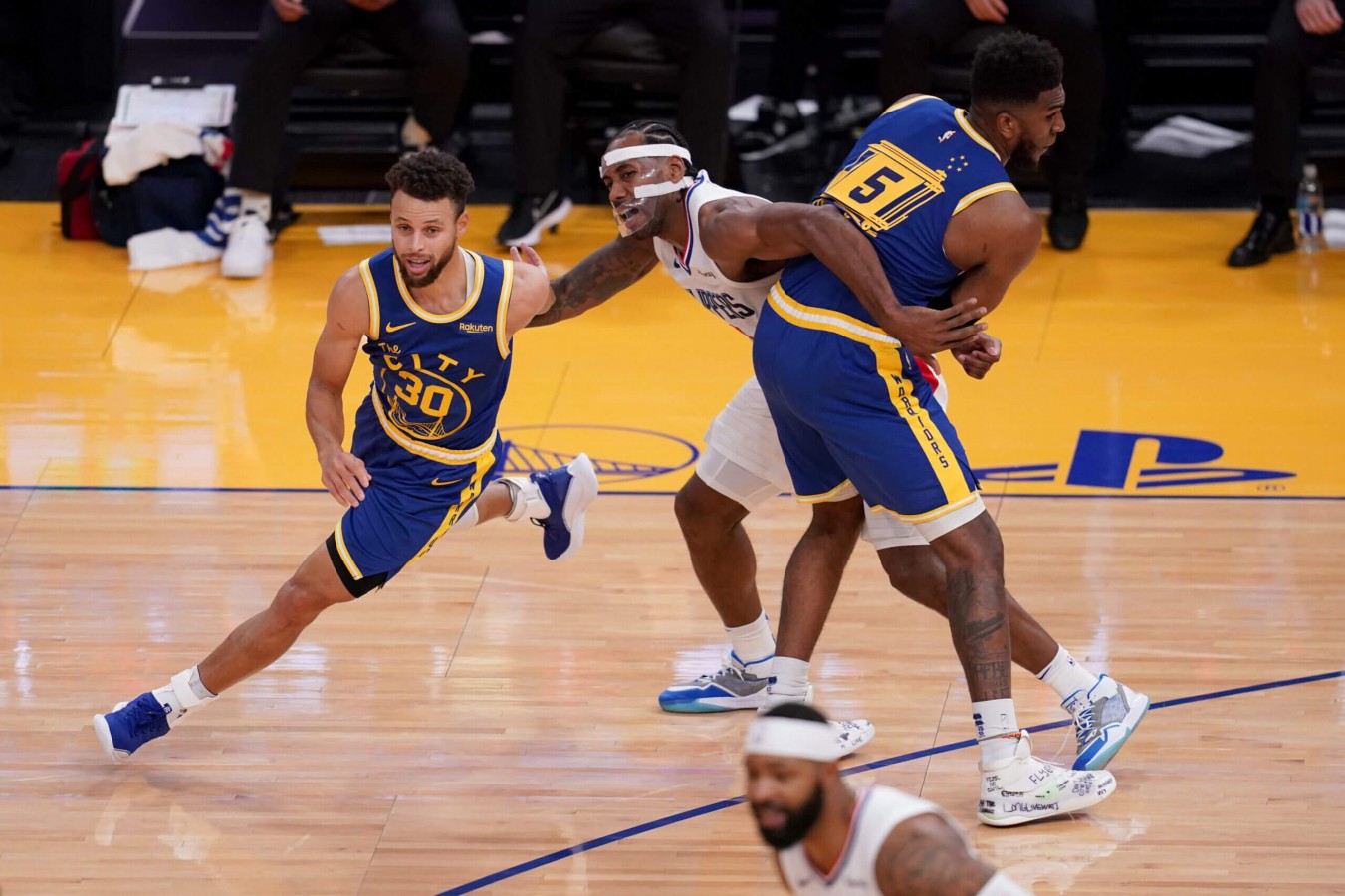
Off ball movement in basketball is one of the most important, yet often overlooked, aspects of a successful basketball offense. While dribbling, shooting, and passing get most of the spotlight, moving without the basketball is what creates open shots, breaks defenses down, and makes an offense truly effective.
Today, we will break down what off ball movement is, why it matters, the key principles behind it, common types of cuts, how to use it in various offensive sets and spacing and drills to improve it. Let’s check it out!
What Is Off Ball Movement in Basketball?
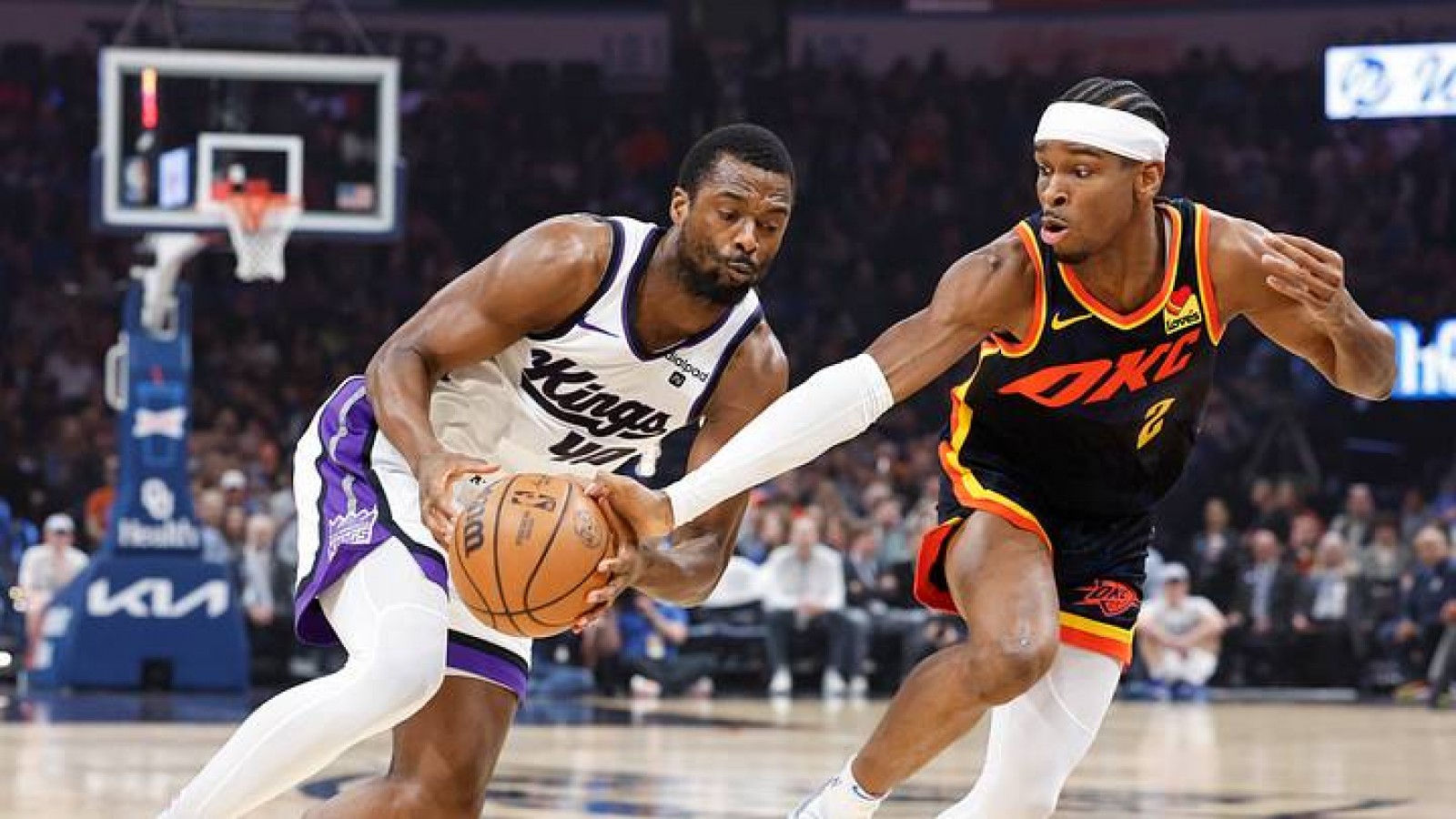
Off ball movement refers to any purposeful movement a player makes without the basketball. Instead of standing still and waiting for the pass, players constantly change position, cut, screen, relocate, or space the floor to help the offense function more efficiently.
It’s not just random motion, it’s intentional movement that creates spaces, passing lanes, mismatches, and scoring opportunities.
Why Off Ball Movement Matters
A dynamic basketball offense doesn’t work if players just stand around. Good off ball movement:
1. Keeps Defenses Honest
Defenders can’t relax or help if offensive players are continuously moving into new positions. Movement forces defensive switches, rotations, and reactions.
2. Creates Scoring Opportunities
Cuts to the basket, backdoor moves, and flare movements create open lanes and open shots that otherwise wouldn’t exist.
3. Improves Floor Spacing
If players space out properly and move without the ball, it stretches the defense and allows easier penetration by the ball handler.
4. Makes Passing Easier
With good movement, passing options expand. Instead of forcing tough passes into a congested area, off ball cuts and spacing open clean, simple passing lanes.
Key Principles of Effective Off Ball Movement
For off ball movement to work as part of your basketball offense, it must be intentional, timed, and coordinated. Here are the core principles:
1. Move with a Purpose
Cut only to open space not randomly. Each cut should have a reason: to get open, to create spacing, or to set something up for your teammates.
2. Maintain Proper Spacing
Players should generally be spaced 12–15 feet apart from each other when not directly involved in a screen or cut. This prevents defenders from easily helping on drives or intercepting passes.
3. Use Change of Pace and Direction
Sudden changes in speed and direction (like a quick fake, hesitation, or burst) help you shed defenders and get open.
4. Read the Defense
Watch how the defender plays you. If they overplay the pass, cut the backdoor. If they sag off, set up for a jump shot or move into a better spacing position.
5. Be Ready to Screen
Movement often includes setting or using screens. After setting a screen, roll, pop, or relocate to get open again.
Common Types of Off Ball Cuts
Understanding and mastering these cuts helps players become more effective offensive threats.
1. V-Cut
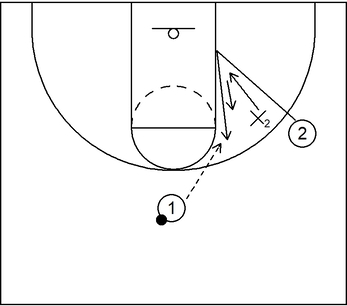
V-Cut is a quick, sharp change of direction (shaped like a “V”) used to lose a defender and get open for a pass.
2. L-Cut
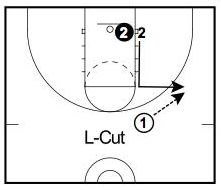
L-Cut starts toward the paint and then cuts out toward the perimeter (or vice-versa), often used by post players or wing players to get open on the perimeter.
3. Backdoor Cut
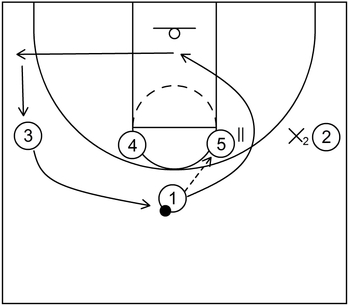
When your defender overplays you (denies the pass), you cut quickly behind them to the basket for an easy layup or pass.
4. Curl Cut
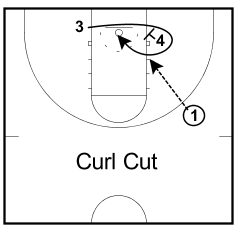
Curl Cut is a curved cut around a screener toward the ball. This is great to use after setting a screen.
5. Flare Cut
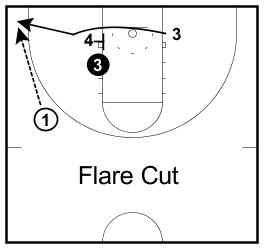
Flare Cut is a movement away from the ball toward the perimeter — usually after a screen — to get open for a shot or to spread the defense.
Offensive Sets and Spacing
Spacing and off ball movement go hand in hand. Let’s look at common offensive formations and how off ball movement fits into each:
1. 3-Out, 2-In
Three perimeter players spread the floor, while two post players work inside. Perimeter players constantly cut, space, and rotate based on where the ball is.
2. 4-Out, 1-In
Four players on the perimeter and one inside. This set emphasizes spacing and movement away from the ball to create driving and passing lanes.
3. 5-Out
All five players start outside the three-point line. This maximizes spacing and off ball movement, allowing constant cuts and relocations.
4. 1-4 or 2-3 Sets
These formations often set up more structured plays but still rely heavily on spacing and effective movement to work.
Drills to Improve Off Ball Movement
Here are drills you can use in practice to sharpen off ball movement skills:
1. Pass & Cut Drill
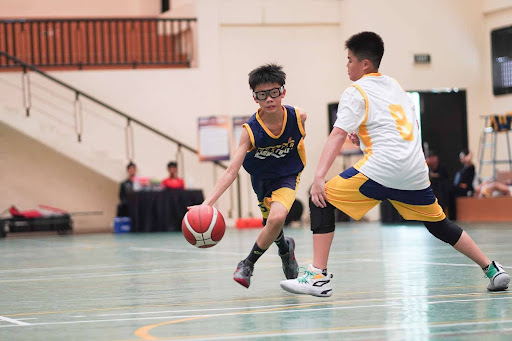
Form a line and have the first player pass to a coach or teammate and immediately make a cut to the basket. Players learn to follow passes with purposeful movement.
2. Spacing and Rotation Drill
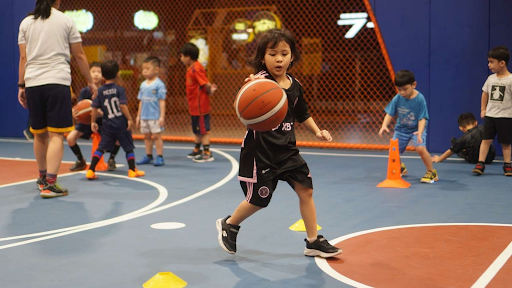
Four players start on the perimeter. After a pass, the passer cuts, and other players rotate into open spots. This builds awareness of spacing and movement timing.
3. Continuous Motion Drill
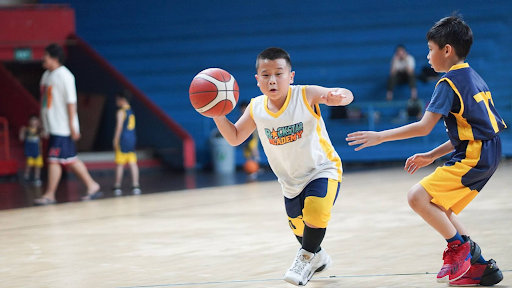
Players rotate positions on every pass. This drill teaches constant movement and spacing awareness.
4. Read & React Movement
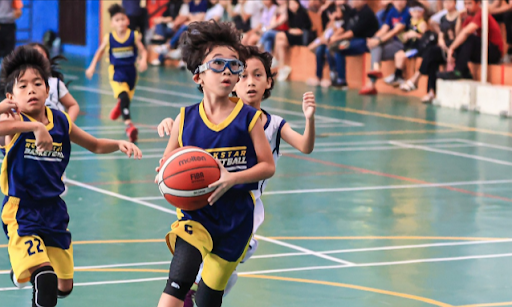
Players must make live reads and cuts based on the defense’s reaction during a 5-on-5 scrimmage. This builds game-like decision making.
Have Your Team Used Off Ball Movement Basketball?
Mastering off ball movement is essential in real-game scenarios like a basketball competition where every cut, screen, and space exploited counts toward victory. If you’re serious about elevating your skills, confidence, and understanding of the game, there’s no better place to start than the basketball program Rockstar Academy.
As a premier Sports & Performing Arts Academy, Rockstar Academy offers professionally designed programs taught by experienced, internationally-certified coaches in a structured, supportive environment that helps players of all ages and skill levels grow physically and mentally.
What makes it even more exciting? Students get the chance to compete in Elite Championships and RockOlympics, gaining real-game experience and learning how to perform under pressure.
For those ready to take things to the next level, Dream Team is our competitive sports program designed to help student-athletes reach their highest potential in sports and in life, developing discipline, teamwork, and a champion mindset.
Don’t miss out—sign up for a FREE trial class now and experience the Rockstar difference on the court!
FAQ
What’s the difference between on-ball and off-ball movement?
On-ball movement involves the player with the basketball, while off-ball movement refers to what players without the ball do—like cutting, spacing, and screening.
How important is spacing in off ball movement?
Extremely important. Good spacing stretches the defense, opens driving and passing lanes, and makes off-ball cuts more effective.
What’s the best way to get open off the ball?
Use a mix of cuts (V-cuts, backdoor cuts, curl cuts), read the defender’s positioning, and time your move with passes.