Guide to Indoor vs Outdoor Pickleball: Strategy, Shots, and Success
Pickleball is a fast-growing racket sport enjoyed on courts both indoors and outdoors. While the rules are the same, the environment around you can dramatically shape your strategy, shot selection, and overall success on the court.
Knowing how to adjust your game depending on whether you’re playing indoors or under the open sky, including adapting to wind, sun, surface, and ball behavior, is essential for improving your performance in both casual play and competitive matches. Let’s dive in!
Environmental Factors That Influence Play
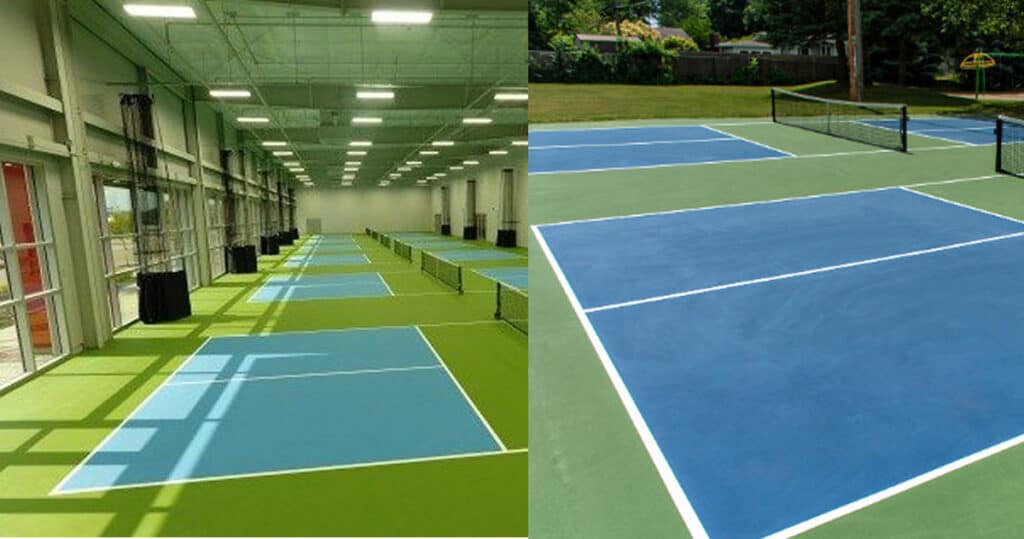
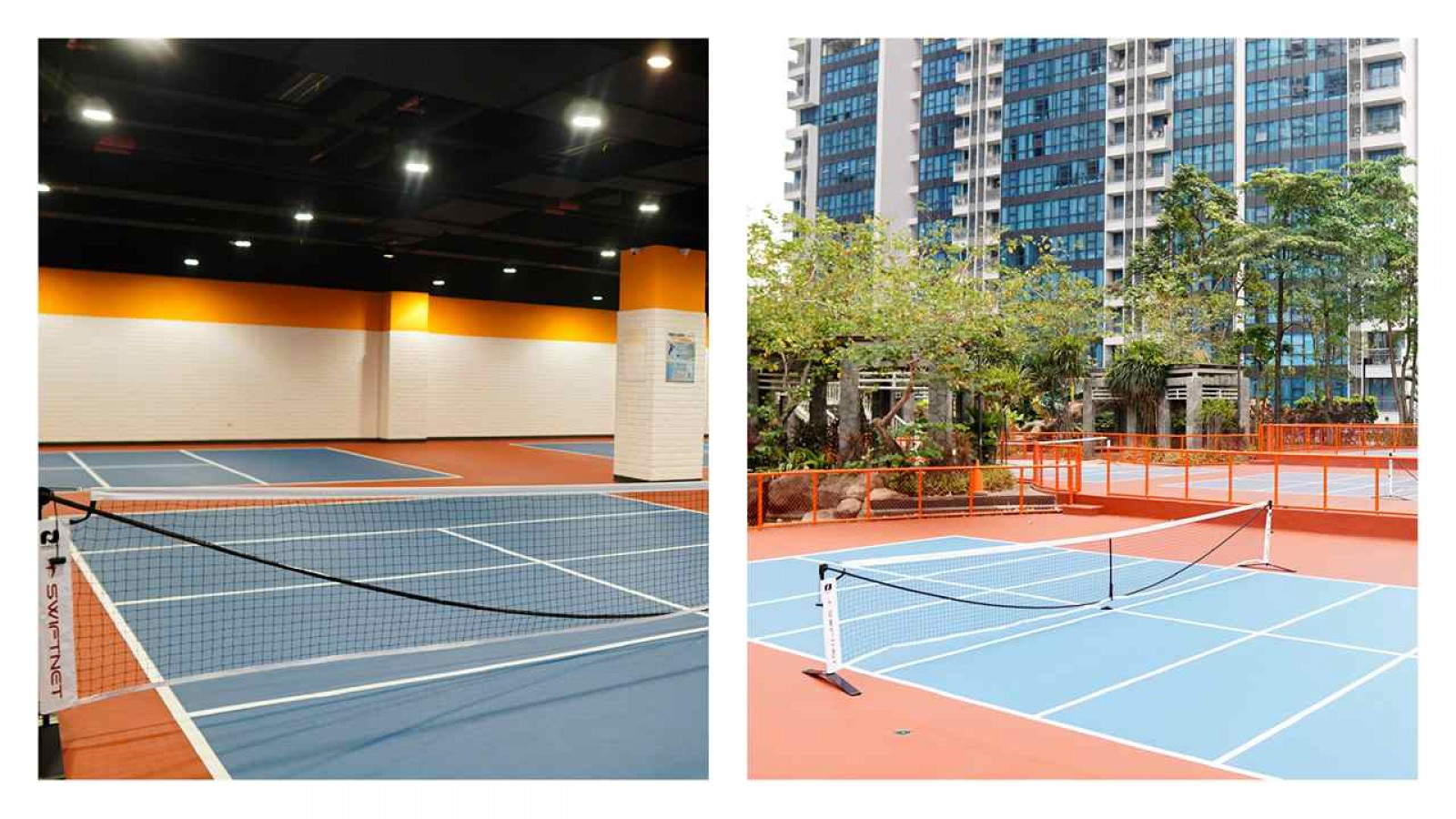
When discussing indoor vs outdoor pickleball, the main difference is definitely the atmosphere. Outdoor is more extreme than indoor because it is directly exposed to the weather. Here is a more detailed explanation:
1. Wind and Its Impact
When playing pickleball outdoors, wind becomes one of the most influential environmental factors. Because pickleball balls are relatively light, even a mild breeze can alter their trajectory, causing high or floating shots to drift unexpectedly.
To stay in control, players often need to keep their shots lower and add topspin, which helps the ball cut through the air more consistently. Serving also requires adjustment.
Hitting into the wind may demand extra power and deeper placement, while serving with the wind at your back allows for softer serves that can still travel deep.
In comparison, indoor play eliminates these challenges entirely, letting you concentrate fully on precision, consistency, and smart shot placement without worrying about wind interference.
2. Sun, Light, and Visibility
Sunlight introduces another layer of difficulty in outdoor pickleball matches. Serving or returning shots directly into the sun can reduce visibility, making quick reactions and accurate timing more challenging.
In addition, shadows cast by trees, fences, or nearby structures can disrupt depth perception and make the ball harder to track during extended rallies. Choosing the right apparel can significantly improve comfort and visibility outdoors.
Indoors, however, lighting is usually even and controlled, so players don’t have to adapt to changing light conditions throughout the day.
Strategic Adjustments for Indoor and Outdoor Play
Of course, there are several strategies that differ significantly between the two places. Here are strategies you should aware of:
1. Indoor Strategy: Precision and Placement
- Dinking and Drops: Without wind, soft shots like dinks and third-shot drops can be executed with precision, helping you set up point-winning opportunities.
- Fast Pace: Indoor balls typically bounce more predictably and quicker, leading to faster rallies. Players must be ready for quick reflex shots and agile footwork.
- Longer Rallies: Because conditions are predictable, rallies indoors tend to last longer, a boon for players who excel in placement and control.
In terms of pickleball double strategy, this environment often emphasizes coordination and communication at the net, since partners can count on each other for tight, controlled dinks and resets.
2. Outdoor Strategy: Power and Adaptability
- Lower Drives: Keeping drives and groundstrokes lower helps reduce the effect of wind on the ball’s flight path.
- Angle Play: Using cross-court angles (especially in doubles) can be more effective outdoors, where wind can distort longer down-the-line shots more.
- Serve Placement: Serving deep and with pace can help you gain an advantage when conditions are breezy or when sun glare affects your opponent’s vision.
- High Lobs When Needed: In certain wind directions or when sun creates visibility challenges, a higher-arcing shot can help players track the ball more easily and reset the rally intelligently.
Outdoor play ultimately rewards players who are adaptable, those who can read conditions and adjust their shot types, angles, and even positioning dynamically.
Shot Selection: What Works Best Where
After understanding the strategy, there are several shot options that you can consider when playing indoors and outdoors.
1. Indoor Shot Choices
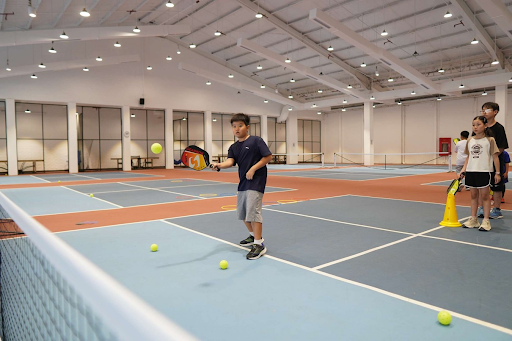
Several shots for indoor includes:
- Soft Dinks: Encourage long rallies and force opponents into controlled but pressured returns.
- Third-Shot Drops: A key indoor play for moving into offensive positioning.
- Controlled Drives: Fast but accurate hits that stay low and exploit openings.
2. Outdoor Shot Choices
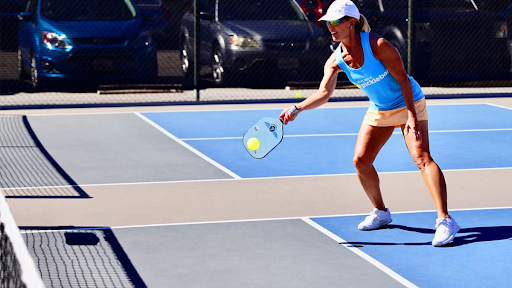
Several shots for outdoor includes:
- Low Drives and Punches: Better for cutting through wind without losing control.
- Crosscourt Dinks: In windy conditions, crosscourt play reduces the ball’s exposure to wind effects.
- Deep Serves and Returns: Giving your opponent less room to place wind-affected shots helps maintain control of the point outdoors.
Indoor Vs Outdoor Pickleball, Which One Do You Prefer?
Whether indoor or outdoor, both have their pros and cons. However, it should be noted that outdoor activities are more extreme than indoor activities because they involve direct interaction with the weather. In playing outdoors, it is not only the game that is being tested, but also our stamina and endurance.
If you can master both indoor and outdoor pickleball, that’s even better! At Rockstar Academy, students are guided to excel in all playing environments through structured and fun pickleball classes designed to build skill, confidence, and adaptability.
Whether it’s controlling shots indoors or handling wind and sunlight outdoors, our coaches help players grow at every level. On top of that, students also get the exciting opportunity to compete in Elite Championships, gaining real match experience and a competitive edge.
Even better—before committing, you can sign up for a FREE trial class and experience the Rockstar pickleball program firsthand. Don’t miss out, spots are limited!
FAQ
Do I need different balls for indoor and outdoor play?
Yes. Indoor balls are softer and designed for calm environments, whereas outdoor balls are harder and built to handle wind and rougher surfaces.
How should I adjust my shots for windy conditions?
Keep shots lower, use topspin to control flight, and rely on crosscourt placement to limit wind disruption.
Are indoor courts easier for beginners?
Generally, yes. Indoor play allows beginners to focus on technique and shot placement.
What’s a good serving strategy outdoors?
Serve deep and with pace to cut through the wind, and avoid serving directly into strong sunlight.
How does doubles strategy differ indoor vs outdoor?
Indoors, tight net play and communication drive success. Outdoors, adapting serves, positioning relative to wind, and using angles become more important for pickleball doubles success.