Striking Skills Explained: A Developmental Guide for Children's Motor Learning

Did you know that striking skill is a child's physical development? Striking skills refers to a specialized subset of object-control or manipulative skills, those movements that involve a child using a tool or their body to hit an object.
These skills are key building blocks of motor proficiency, body coordination and when taught and practiced well, they help kids become confident, active movers. Today, we’ll explore what striking skills are, how children learn them, and effective striking activities you can use.
What Are Striking Skills?
Striking is defined as using an implement (e.g., bat, stick, racquet, paddle) or body part to hit or redirect a moving or stationary object. Described as “the most complex of the fundamental movement skills” and is found in many sports such as tennis, cricket, hockey, golf and teeball.
Striking falls under the umbrella of object-control skills, one of the three main categories of Fundamental Movement Skills (FMS) alongside locomotor and stability.
Because striking demands coordination of the body, implement, and object in space, it tends to develop later and requires more refined motor control than simpler skills like throwing or catching.
How Children Learn Striking Skills & Developmental Phases
Understanding how children develop striking skills helps educators and coaches tailor lessons appropriately. There are three learning phases for striking with implements: Discovering, Developing, and Consolidating.
1. Discovering Phase
In this stage children are exploring the striking action; they may use stationary or slowly moving objects and simple implements. Characteristics of this phase:
- Feet tend to stay stationary; body usually faces the object directly.
- Little trunk rotation or weight shift; hits are more from straightening bent joints rather than full body power.
- Contact may be inconsistent.
2. Developing Phase
Here children begin showing more consistent striking and controlling of objects. Features include:
- The body turns side-on to the object; weight shifts forward prior to contact.
- Combined joint extension (elbow/shoulder) and trunk rotation begin to appear.
- Strikes aim for accuracy (direction) and distance (force).
3. Consolidating Phase
At this level children apply striking skills with increasing efficiency and adaptability in more varied contexts. Indicators:
- The body is side-on, weight on the back foot, shifting forward as the object moves toward them.
- Straightening of arms in a full arc, more refined timing and coordination.
- Children can strike moving objects from different levels, angles, speeds.
Striking Activities & Practical Ideas
Here are some ready-to-go striking activity ideas that work across the phases described. Many draw from station-based activities used in schools.
1. Balloon Striking

In this activity, children use a light paddle or foam bat to hit a balloon back and forth or over a line. The balloon’s slow movement makes it easy to track and hit, helping beginners practice coordination and timing.
Simple cues like “keep your eye on the balloon” and “follow through your swing” guide them toward better control and technique.
2. Station-Based Striking With Implements
Set up 4-6 stations where children rotate, each station focusing on a different implement or target. Several examples you can try:
- Put-put or mini golf style where you strike a ball toward a target.
- Balloon tennis to paddle the balloon over a mini-net.
- Tee hitting by striking a stationary ball off a tee toward a wall/target.
- Hockey stick strike where you hit a small ball across a marked lane.
3. Target Striking with Bat or Stick
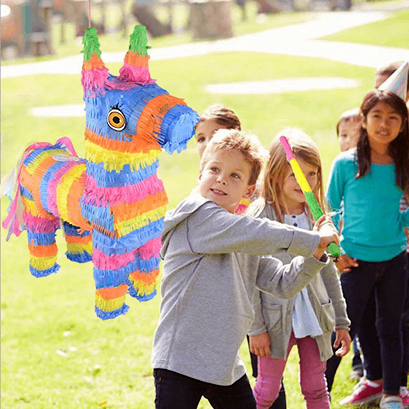
Children use a bat or long implement to strike a stationary or gently tossed ball toward targets like cones or hoops. It helps them practice accuracy, distance control, and coordination while focusing on key techniques such as maintaining a side-on stance, shifting weight forward, keeping eyes on the ball, and following through after the swing.
4. Game Play Integration
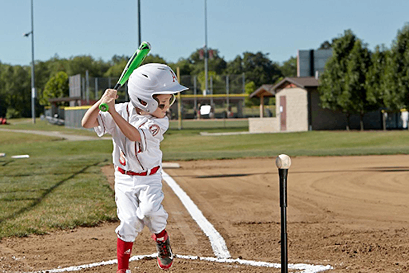
After children gain confidence, striking skills can be practiced through modified games like tee-ball, paddle games, or hockey relays. These activities let them apply their skills in dynamic, game-like situations, helping them progress from basic practice to real play while keeping the experience fun and engaging.
Tips for Setting Activities
Here are several fun tips for striking activities that keep kids active, safe, and excited to learn:
- Start Simple, Then Level Up
Begin with easy targets and larger balls or paddles so kids can get the feel of striking. Once they gain confidence, make the targets smaller or increase the distance to make it more challenging.
- Use Soft and Safe Equipment
Choose lightweight bats, foam balls, or soft paddles to prevent injuries and build comfort. Safety always comes first so make sure everyone has enough space to move freely.
- Show, Don’t Just Tell
Always demonstrate each move or challenge first! Kids learn faster when they can see the correct motion before trying it themselves.
- Rotate Games and Equipment Often
Keep things fresh by changing up the targets or the type of equipment every few minutes. Switching between bats, rackets, or even pool noodles makes practice exciting and unpredictable!
- Set Short, Fun Sessions
Younger children have short attention spans, so aim for quick, focused sessions around 4 to 6 minutes per station. Keep the energy high and the fun constant.
- Celebrate Every Hit
Cheer for every good attempt, not just perfect hits! Positive feedback boosts confidence and keeps children motivated to try again.
- Encourage Creativity
Let kids come up with their own striking games or target ideas. This sparks imagination while improving their coordination and problem-solving skills.
- Add Friendly Challenges
Introduce mini-competitions, like “Who can hit the target the most times in 30 seconds?” It teaches healthy competition and teamwork while keeping spirits high.
- Focus on Technique Over Power
Remind kids that striking is about control, not just strength. Teach them to aim and follow through smoothly for better accuracy and rhythm.
- Always End on a Positive Note
Finish each activity with high-fives, encouragement, or a fun cool-down game. Ending with positivity helps kids look forward to the next session!
Learn Striking Skill With Rockstar Academy!
Developing striking skills becomes even more effective when introduced through a multi-sport class, where children can explore different activities that involve hitting, swinging, and coordination.
These classes not only make learning more engaging but also help children transfer skills between sports for a stronger foundation for overall motor development.
At Rockstar Academy, the Sports & Performing Arts Academy provides the perfect environment for children to grow through structured, fun, and age-appropriate programs.
Each class is guided by professional coaches who focus on improving fundamental movement skills, like striking while fostering teamwork, confidence, and discipline. Rockstar Academy’s programs are designed to nurture every child’s physical and emotional growth, blending expert instruction with a supportive community atmosphere.
By joining us, your child gains access to world-class facilities, diverse sports and performing arts options, and a personalized learning experience that encourages them to reach their full potential.
Additionally, we also give students the chance to shine through exciting competitions like RockOlympics. This special event offers a unique opportunity for every child to challenge themselves, discover their strengths, and experience the thrill of achievement.
With programs available across multiple locations and the option for a free trial class, Rockstar Academy is the ideal place to start your child’s journey toward becoming active. Sign up now!
FAQ
At what age should children begin striking activities?
Children can begin very basic striking exploration from preschool age (2-5 years) using light implements, balloons or soft covers. As their coordination improves, more structured striking can be introduced in early primary years (around 6–8).
How often should striking skill practice happen?
Ideally, striking skills should be integrated regularly. Frequent but shorter periods of practice often work better than long, infrequent sessions—especially for young children whose attention spans are shorter.
My child struggles to hit the ball consistently, what should I do?
Use simpler drills: slower moving objects, larger targets, bigger implements, and ensure correct stance and contact. Focus on fundamentals: keep eyes on the ball, shift weight, swing through. Then gradually add challenges.